
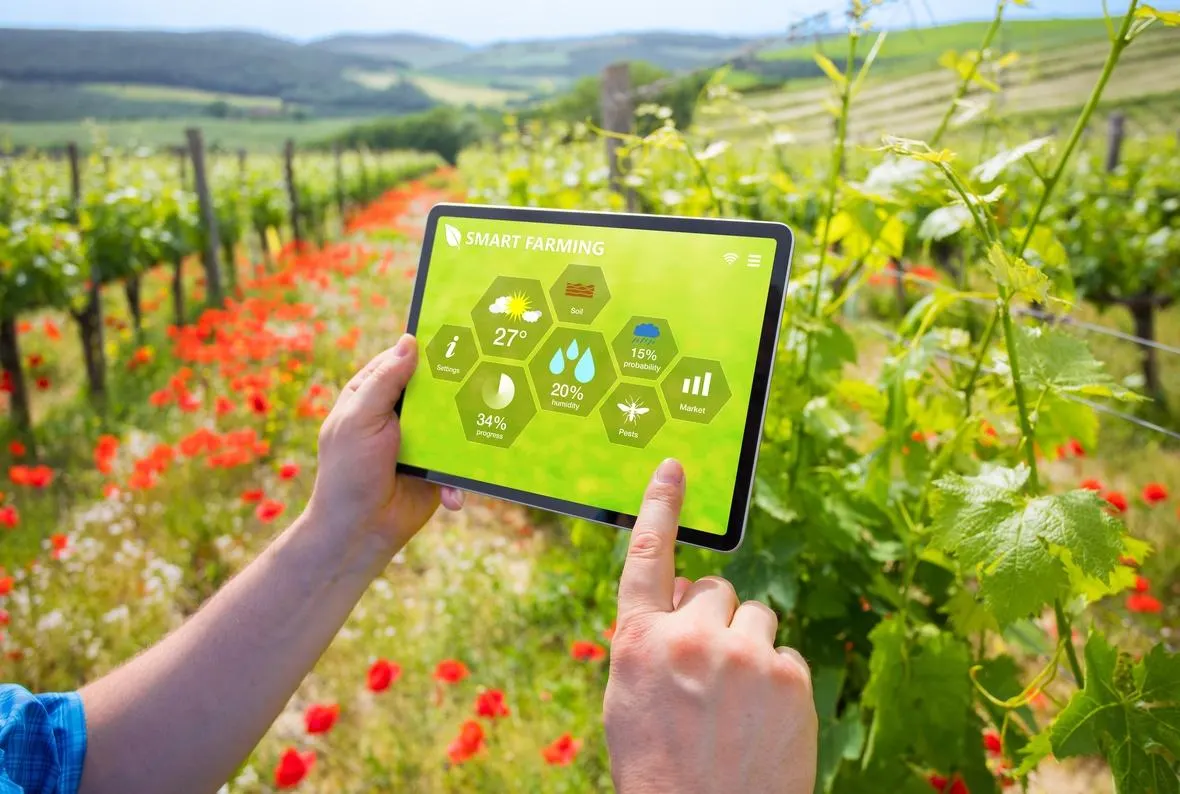
Imagine a farmer who has prepared the land, purchased seeds and spent weeks caring for a crop. Everything seems to be going well. Then, unexpectedly, heavy rain arrives and damages part of the harvest.
Now imagine a fishing community preparing to head out to sea when weather conditions suddenly become dangerous.
For these communities, weather is not simply something to discuss over breakfast. It can affect income, food supplies, safety and the future of an entire season.
That is why Agri, Fisheries & Climate is becoming an increasingly important area for technology and innovation.
Farmers and fishing communities have always relied on experience and local knowledge. Today, digital tools can support that knowledge with weather information, connected sensors, satellite observations and better access to market data.
Technology cannot control the weather. But it can help people prepare for uncertainty and make more informed decisions.
Why Agriculture and Fisheries Need Better Information
Agriculture and fisheries operate in environments that are constantly changing.
Rainfall can arrive earlier or later than expected. Temperatures can affect crop growth. Water quality can influence fish health. Changes in sea conditions can affect when fishing is safe.
For many small-scale producers, even a short period of disruption can have financial consequences.
This is where digital agriculture and smart fisheries management can make a difference.
Access to timely information helps people understand what is happening and consider what to do next.
A farmer may use a weather forecast to plan irrigation. A fish farmer may monitor water temperature and oxygen levels. A fishing operator may check official marine weather warnings before making a trip.
These decisions still require human judgement, but better information can make that judgement more effective.
Smart Farming Is Changing Everyday Agricultural Work
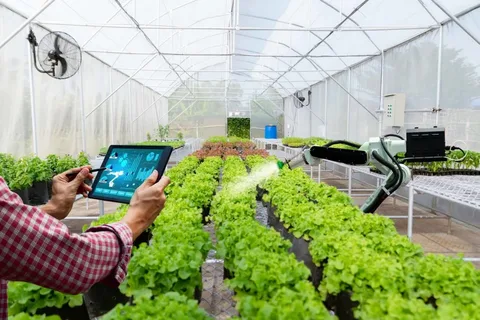
Farming involves hundreds of decisions, many of which depend on conditions that can change from one field to another.
How much water does a crop need? Is the soil too dry? Should fertiliser be applied now or later? Are certain areas showing signs of plant stress?
Smart farming technology can help answer some of these questions.
Soil sensors, digital weather stations, satellite imagery and connected irrigation systems can provide information about field conditions.
For example, a farmer using soil-moisture sensors may discover that one section of a field needs watering while another already has enough moisture.
Rather than treating the entire field in exactly the same way, the farmer can make a more targeted decision.
This approach, often associated with precision agriculture, may help improve resource use and reduce unnecessary watering.
However, these technologies are not equally practical for every farm. Equipment costs, maintenance, connectivity and training all affect whether a solution makes sense.
Sometimes a simple, reliable tool that solves one important problem is more useful than an expensive system with features a farmer rarely needs.
Climate Information Can Help Farmers Prepare Earlier
Weather forecasts have always mattered to agriculture. What is changing is how information can be delivered and used.
Through climate-smart agriculture, farmers can combine weather forecasts, local observations and agricultural knowledge to plan for changing conditions.
For instance, a farmer may adjust irrigation schedules during a dry period or delay certain field activities when heavy rain is expected.
Longer-term climate information can also help communities consider crop choices, planting schedules and water-management strategies.
Digital platforms can make this information easier to access, particularly when it is available in languages and formats that local communities understand.
Still, forecasts are not guarantees. Weather conditions can change, and forecasts may be less precise at a very local level.
The most useful systems provide understandable information, communicate uncertainty and support practical decisions rather than promising perfect predictions.
Technology Is Helping Fisheries Monitor Water Conditions
Fishing and aquaculture face their own challenges.
For fish farms, water quality is especially important. Changes in temperature, dissolved oxygen, pH and other conditions can affect fish health.
Traditionally, monitoring may involve manual checks at scheduled intervals. While this remains useful, conditions can sometimes change between inspections.
With IoT in aquaculture, connected sensors can measure selected water conditions and send readings to a monitoring system.
For example, if dissolved oxygen levels fall below a chosen threshold, a properly configured monitoring system may alert the farm operator.
The operator can then investigate and take appropriate action.
This does not remove the need for regular inspections or expert knowledge. Sensors need maintenance, readings need to be checked, and alert systems must be dependable.
But when used appropriately, connected monitoring can help aquaculture teams identify certain problems earlier.
For wild fisheries, technology can also support monitoring, traceability and responsible resource management. The effectiveness of these tools depends on good data, appropriate oversight and cooperation among communities and authorities.
Reliable Internet Connectivity Makes Digital Agriculture Possible
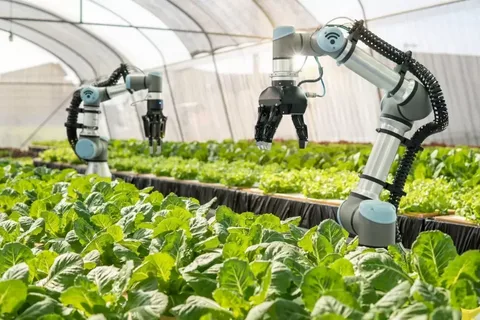
There is one challenge that often gets overlooked when people talk about agricultural technology.
Connectivity.
A sensor may collect useful information, but that information is less helpful if it cannot reach the farmer when needed. A digital marketplace may offer access to buyers, but unreliable internet can make it difficult to use.
Rural communities may face connectivity gaps because of distance, terrain, infrastructure costs or limited network coverage.
This makes rural internet connectivity an important part of digital development.
Reliable connections can support access to:
- Weather forecasts and climate information.
- Digital agricultural advisory services.
- Online marketplaces and price information.
- Remote technical support.
- Digital payments and business records.
- Training resources for farmers and fishing communities.
Different locations require different solutions. Some may benefit from fibre or mobile broadband, while others may need alternative connectivity technologies.
The goal should be practical access that people can afford and depend on, not simply installing technology and assuming the problem is solved.
Can Artificial Intelligence Help Farmers and Fishing Communities?
Artificial intelligence is creating new possibilities for analysing environmental and agricultural data.
AI in agriculture can support tasks such as identifying possible crop diseases from images, estimating yields, analysing weather patterns and detecting signs of plant stress.
For example, a farmer might use an image-based tool to check whether a plant shows symptoms associated with a particular disease.
The result can provide a useful starting point, but it should not automatically be treated as a confirmed diagnosis. Image quality, local conditions and the tool’s limitations can affect accuracy.
In fisheries and aquaculture, AI may help analyse water-quality trends, monitor selected activities or support production planning.
These tools work best when they are built around reliable information and practical needs.
They should support farmers, fishers and agricultural specialists rather than replace local experience or professional advice.
Reducing Waste Is Part of Climate Resilience
Climate challenges are not only about growing food or catching fish. They also affect how products are stored, transported and sold.
Food can be lost because of poor storage, delayed transportation, inadequate cooling or a lack of market information.
Digital systems can help improve coordination between producers, storage facilities, distributors and buyers.
For example, digital supply chain management can provide better visibility into stock levels, shipment progress and delivery schedules.
Temperature monitoring can also be useful for certain perishable products when supported by appropriate storage and handling procedures.
Reducing avoidable waste can help producers protect income and make better use of the resources already invested in production.
However, digital tools cannot replace essential physical infrastructure such as suitable roads, cold storage, clean water and reliable electricity. Effective solutions often combine technology with practical improvements on the ground.
The Human Side of Agricultural Technology
It is easy to become excited about sensors, drones, satellites and AI.
But imagine introducing an advanced farming application to someone who has limited internet access, cannot afford the equipment or has never received training on how to use it.
The technology may be impressive, but it will not deliver much value.
That is why digital inclusion matters.
Farmers and fishing communities need tools that are affordable, understandable and suited to their daily work. Training, local-language support and access to technical assistance can be just as important as the technology itself.
Solutions should also respect local knowledge. People who work with land and water every day understand conditions that a digital system may not fully capture.
The strongest approach combines that experience with useful information and dependable tools.
What Does the Future Hold for Agri, Fisheries & Climate?
The future will likely bring closer connections between environmental monitoring, agricultural data, digital marketplaces and climate information.
Farmers may gain better access to local forecasts and precision irrigation. Aquaculture operators may use connected monitoring more widely. Supply chains may become better at tracking products and reducing waste.
At the same time, communities will need to address practical concerns such as equipment costs, digital skills, data reliability, cybersecurity and rural connectivity.
No single app or device will solve every climate-related challenge.
Progress will come from identifying real problems, listening to the people affected and choosing technology that can make a measurable difference.
Final Thoughts: Technology Cannot Change the Weather, but It Can Help Us Prepare
Farmers and fishing communities will always face some uncertainty. Rain will not always arrive when expected, water conditions can change, and extreme weather can disrupt even well-planned operations.
But people do not have to face every challenge without information or support.
Through smart farming, IoT in aquaculture, climate information systems and reliable digital connectivity, communities can gain additional tools to understand changing conditions and plan their next steps.
The real value of technology is not that it promises to prevent every problem.
It is that it can help people recognise risks, use resources more thoughtfully and make better-informed decisions.
When these tools are accessible and designed around real needs, they can contribute to more resilient agricultural and fisheries communities.
How Sizaf Infocomm Supports Connected Communities
SIZAF NET WITH TECH focuses on technology and connectivity solutions for individuals, businesses and organisations.
Reliable network solutions, managed IT services and suitable digital infrastructure can help support access to online platforms, communication systems and digital tools used by agricultural businesses and related organisations.
As rural industries continue exploring digital opportunities, dependable connectivity can be an important part of bringing useful information and services closer to the people who need them.
Malaysia: +60 146600012
USA: +1 516 880 9996