Agriculture and fisheries have always depended on something humans cannot fully control: nature.
A farmer can prepare the soil, choose the right seeds, and plan the harvest, but weather can still change everything. A fisherman can understand seasonal patterns and know the waters well, yet changing ocean conditions can make each trip less predictable. At the same time, climate change is putting additional pressure on food production, water resources, land, and marine ecosystems.
This is where technology for agriculture, fisheries, and climate is becoming increasingly important.
From sensors in farmland to GPS-enabled fishing vessels, from cloud-based monitoring to AI-powered data analysis, digital technology is giving farmers, fisheries, businesses, and environmental organisations better ways to understand what is happening around them and respond more quickly.
The goal is not to replace traditional knowledge. It is to combine experience with better information.
Why Technology Matters for Modern Agriculture and Fisheries
For generations, farming and fishing have relied heavily on experience. Farmers learned to understand soil, rainfall, seasons, and crops. Fishermen developed knowledge of tides, weather, locations, and marine life.
That knowledge remains valuable.
What has changed is the amount of information available today.
Modern digital agriculture technology can collect information about soil moisture, temperature, rainfall, crop conditions, and irrigation. In fisheries, connected systems can provide information about vessel locations, weather conditions, routes, and operational activity.
When this information is brought together through reliable network solutions, it becomes much easier to make informed decisions.
Instead of asking only, “What happened?”, businesses and organisations can start asking, “What is happening right now, and what could happen next?”
Smart Agriculture Is Changing the Way Farms Operate
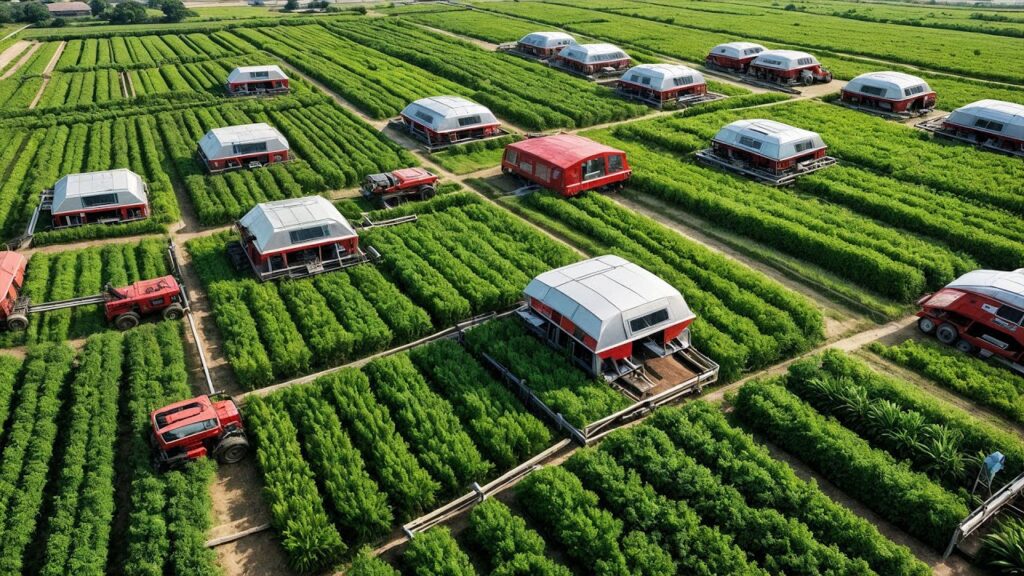
A modern farm can contain much more technology than people might expect.
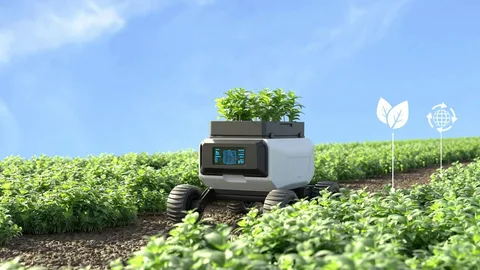
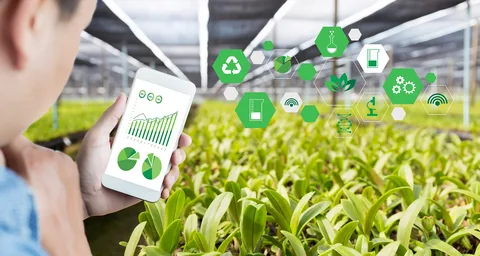
Sensors can monitor soil moisture and temperature. Weather stations can collect local environmental information. Connected irrigation systems can help manage water usage, while drones and cameras can provide aerial views of crops.
This approach is often called smart farming or precision agriculture.
The basic idea is simple: use data to understand the farm better.
For example, if sensors show that one part of a field has enough moisture while another area is becoming dry, irrigation can potentially be managed more precisely instead of treating the entire field in exactly the same way.
That can help businesses make better use of water, energy, labour, and other resources.
IoT Is Connecting Farms, Equipment and Fisheries
The Internet of Things (IoT) is one of the technologies helping agriculture and fisheries become more connected.
IoT devices can collect information and send it through networks to a central system.
On a farm, connected devices may monitor:
- Soil moisture
- Temperature
- Humidity
- Water levels
- Equipment performance
- Crop conditions
- Weather conditions
In fisheries, connected technology can support monitoring of:
- Vessel locations
- Fuel consumption
- Weather conditions
- Equipment
- Fishing routes
- Storage conditions
The real value comes when these devices do more than simply collect data. When information is available in one place, users can identify changes and respond before small problems become expensive ones.
AI Can Turn Agricultural Data Into Useful Insights
Data by itself is not always useful.
Imagine receiving thousands of readings every day from sensors across a large farm. Looking through all of that information manually would take a huge amount of time.
This is where Artificial Intelligence (AI) and data analytics can help.
AI systems can analyse large amounts of information and identify patterns that may be difficult to notice manually.
For agriculture, this could support areas such as crop monitoring, demand forecasting, weather analysis, and equipment maintenance.
For fisheries, data analysis can help organisations better understand operational patterns and environmental conditions.
AI does not remove uncertainty. Weather can still change. Markets can still move. Nature remains unpredictable.
But better analysis can help people make decisions with more information.
Climate Monitoring Needs Reliable Digital Infrastructure
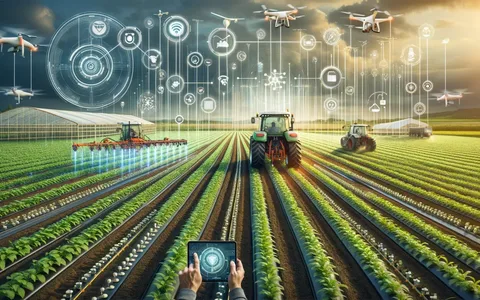
Climate-related challenges are not limited to farms and oceans.
Governments, researchers, environmental organisations, and businesses need reliable information about environmental conditions.
Digital systems can support the collection and management of information related to:
- Weather
- Rainfall
- Temperature
- Water resources
- Land conditions
- Forests
- Coastal areas
- Marine environments
- Agricultural activity
This information can support planning, research, reporting, and environmental management.
However, none of this works properly without reliable digital infrastructure.
Sensors need connectivity. Data needs storage. Applications need networks. Organisations need secure systems for accessing and sharing information.
Technology may be the visible part of a digital agriculture project, but the infrastructure underneath it is what keeps everything connected.
Cloud Computing Makes Data Easier to Access
Agricultural and environmental data can come from many different locations.
A farm may have sensors in several fields. A fisheries organisation may collect information from multiple vessels. A climate monitoring project may have data coming from different regions.
Keeping all of that information on individual devices can make management difficult.
Cloud computing provides another approach.
Data can be stored and processed through cloud-based platforms, allowing authorised users to access information from different locations.
For businesses operating across multiple farms, offices, warehouses, or operational areas, this can make collaboration much easier.
A manager sitting in an office does not necessarily need to be physically present in the field to review the latest available information.
Technology Can Help Reduce Resource Waste
Sustainability is not only about protecting the environment. It is also about using resources intelligently.
Water, fuel, electricity, fertiliser, land, and food all have economic and environmental value.
Technology can help businesses understand where resources are being used and where improvements may be possible.
For example, better monitoring can help identify unnecessary water usage. Equipment monitoring can reveal inefficient machinery. Digital logistics systems can help businesses understand transportation requirements.
Small improvements across many operations can make a meaningful difference over time.
Digital Fisheries Can Support Better Operational Decisions
Fishing is a physically demanding industry where conditions can change quickly.
Reliable connectivity and digital tools can help fishing businesses monitor information while vessels are operating.
GPS and mapping technologies can provide location information. Weather data can help crews understand changing conditions. Connected equipment can provide operational information.
For fisheries businesses, having access to timely information can support planning and improve communication between vessels and operations teams.
Technology should work alongside responsible fishing practices and environmental management rather than being viewed separately from them.
Cybersecurity Is Becoming Important for Agriculture Too
When agriculture and fisheries become more connected, cybersecurity becomes part of the conversation.
A farm management platform, connected irrigation system, cloud application, or fisheries monitoring system can contain valuable operational information.
A cyberattack or system failure could interrupt operations and create financial losses.
Businesses therefore need to think about:
- Secure networks
- User access controls
- Data protection
- Software updates
- Backup systems
- Device security
- Monitoring
- Recovery planning
The more connected an operation becomes, the more important it is to protect that connectivity.
Technology and the Future of Climate-Smart Business
The future of agriculture, fisheries, and climate management will likely involve even greater integration between physical operations and digital systems.
Sensors will continue becoming more affordable. Networks will connect more devices. Cloud platforms will handle larger volumes of information. AI will become increasingly useful for analysing complex datasets.
But technology alone will not solve every agricultural or climate challenge.
Successful digital transformation also requires people who understand the technology, reliable infrastructure, practical implementation, and clear goals.
The most useful solutions are not necessarily the ones with the most advanced features. They are the ones that solve real problems.
A small farm may need better irrigation monitoring rather than a complicated digital platform. A fisheries company may need reliable connectivity and tracking rather than dozens of disconnected applications.
The right technology depends on the actual needs of the operation.
Building a More Connected and Sustainable Future
Agriculture, fisheries, and climate management are deeply connected to everyday life.
They influence food availability, livelihoods, economic activity, natural resources, and environmental sustainability.
As these industries face new challenges, technology can provide better visibility, faster communication, stronger data management, and more informed decision-making.
The real opportunity is not simply to make agriculture or fisheries more “digital.”
It is to make them smarter, more connected, more efficient, and more prepared for change.
When reliable networks, IoT, cloud computing, AI, cybersecurity, and human experience work together, technology becomes more than a collection of tools. It becomes part of a practical strategy for building resilient operations.
Final Thoughts
The future of Agri, Fisheries & Climate will not be shaped by technology alone. It will be shaped by how intelligently technology is used.
Farmers, fisheries businesses, environmental organisations, and other stakeholders can use digital systems to understand their operations more clearly, manage resources more carefully, and respond to changing conditions.
The important question is no longer whether technology has a role in these industries.
It is how effectively businesses can connect people, data, infrastructure, and technology to create lasting value.
How Sizaf Infocomm Can Help
Building a connected agricultural, fisheries, or climate-focused operation requires dependable network services, technology infrastructure, connectivity, cloud solutions, and digital support.
Sizaf Infocomm helps businesses and organisations build technology solutions around their operational needs.
Malaysia: +60 146600012
USA: +1 516 880 9996