
Introduction: When Technology Makes a Real Difference in People’s Lives
Imagine a student at home attempting to attend an online class only for the internet to keep dropping. The teacher’s going on with the lesson and the student is desperately trying to get back on. By the time they do get back on, they’ve completely missed the bit of the lesson that was just delivered.
Now picture the same scenario at a healthcare setting. A doctor needs to get to a patient’s records and the system is a bit slow. A small technical glitch can obviously make a busy day even more difficult.
These situations may seem mundane, but they illustrate just how much we rely on technology in our everyday lives.
Healthcare and education are two areas where reliable digital access can make a real difference. Students need the right tools to learn, teachers need the right systems to teach and support their classes and healthcare professionals need secure access to the information they need to do their jobs.
This is where health and education technology comes in.
Tech can’t fix everything in a classroom or a hospital. A good broadband connection won’t replace a good teacher and a digital system won’t replace the professional judgement of a doctor. But the right technology can make the day to day running of things far easier, improve communication and enable people to access services that they might otherwise find very difficult to access.
For Malaysia where you have communities with very different levels of digital access and resources it’s absolutely vital that these solutions are practical, reliable and affordable.
How Technology Is Changing the Way Students Learn
Think about how students go about finding information these days as opposed to how they did it years ago. Rather than relying solely on printed textbooks they can now watch educational videos, attend virtual classes, use interactive learning platforms and work with their peers online.
Learning is no longer confined to the classroom or to a particular time of day.
For teachers, digital tools can be a real asset in terms of sharing resources, collecting work, explaining concepts and communicating with parents. Students can go back and watch the recorded lessons, access further learning materials and work at their own pace.
But there is one thing to remember: the benefits are conditional upon students being able to actually access the technology.
A school might have a fantastic online learning platform but students will find it very difficult to use if they don’t have a reliable internet connection or if their family can’t afford a device that will work. Some students will also need some support before they’re confident enough to learn online on their own.
This is why digital education in Malaysia should be about far more than just introducing a new app or buying a few more computers.
Schools and the wider education sector need to think about internet access, device access, teacher training, technical support and the needs of students from all different backgrounds.
When they all come together technology becomes a useful learning tool rather than another barrier.
Healthcare Is Becoming More Connected, Too
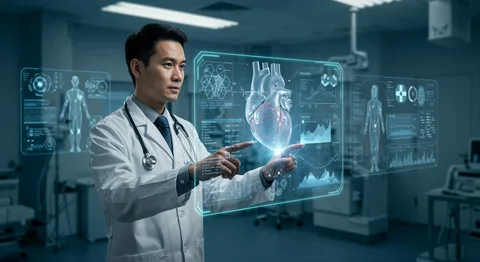
Healthcare has changed massively as digital systems have become more widespread.
Today patients can book in online, get reminders via their mobile app, access their reports digitally and in many areas can speak to a clinician via a remote consultation service.
For the health and care staff it can help to organise appointments, manage records, share information with other teams that are authorised to see it and in some cases reduce the amount of admin that goes with the day to day running of a service.
Imagine someone living a long way from a major medical centre. Getting down to see their doctor for every follow-up could be a massive ask in terms of time, transport and the cost of a whole day away from work. Where appropriate services are available a remote consultation can make some of those follow-ups a lot more convenient.
Of course not every medical issue can be dealt with online. A physical examination, a diagnostic test or indeed emergency treatment may still require you to turn up in person. Digital health should be seen as a way of supporting appropriate care rather than a replacement for that care when it is required.
There’s also the issue of information security.
Health records contain sensitive information which patients would expect to be protected by the organisation. If the records are held in digital form then the provider has to be very careful about access to them, the security of the systems and the procedures for dealing with the information.
Digital healthcare solutions work best when convenience and patient privacy are equally important.
Why Reliable Internet Connectivity Matters in Both Sectors
One thing that healthcare and education have in common is their reliance on good connectivity.
A student in a live session requires a good connection. A teacher uploading a large file will need sufficient bandwidth to do so without undue delay. A clinician using a cloud application will require a reliable connection to the system.
When the connection drops you don’t always just end up with a few minutes of annoyance.
A student could easily miss an explanation that they’re going to have to catch up on. A clinic could be delayed as staff go through the process of trying to get records. Staff may have to revert to a manual process which would obviously create additional work for everyone.
This is why reliable internet connectivity is something that schools, universities, clinics and hospitals need to consider when looking at their technology needs.
The answer isn’t necessarily to go out and buy the most expensive internet package. The first thing you need to do is understand how your systems are actually used, how many people are going to be accessing them, what applications are the most important and what level of reliability you actually need.
A school with a number of classrooms all linked together will have different requirements to a small learning centre. A healthcare site using a number of different digital systems will have different requirements to a small clinic.
Good planning will help an organisation to select the right infrastructure to meet its actual requirements.
It’s also sensible to look at backup connectivity, network monitoring and support in place in the event of an interruption which could have a serious impact on day to day running.
Keeping Student and Patient Information Safe

Here’s a scenario which illustrates a problem that many organisations simply fail to see.
A teacher is required to send a document to a colleague and inadvertently makes it available to a wider group of people. In a different scenario a member of staff receives an email which appears to be legitimate, asking them to log in to a system. The link in the email takes them to a fraudulent website which is designed to harvest their password.
Neither of those scenarios requires the attacker to breach an advanced security system. A single mistake is quite sufficient to result in the exposure of information.
As more and more schools and healthcare providers go digital, data security in healthcare and education becomes a shared responsibility.
Schools will have access to pupils’ personal data, attendance, results and information about their individual learning needs. Health organisations will have access to medical records, prescriptions, diagnostic reports and other sensitive information.
Both sectors require appropriate protections.
Some practical measures include:
– Use strong passwords and where appropriate use multi-factor authentication.
– Give staff access to no more than the information they need to do their job.
– Keep the OS, applications and security tools up to date.
– Maintain protected backups of key records.
– Training staff to spot suspicious emails and unsafe links.
– Looking at how the information is gathered, stored, shared and deleted.
– Having a clear plan in place for dealing with suspected security incidents.
Organisations in Malaysia should also be aware of the legal and regulatory requirements which apply to the personal information they process.
Security should not be an afterthought. It should be part of the way we design and manage digital services from the outset.
Can AI improve healthcare and education?
AI is increasingly part of the conversation around schools, universities and healthcare. It has a lot of potential, but its value is contingent on how it’s actually deployed.
In education AI can be used to help teachers create learning materials, provide extra practice questions and explain certain topics in different ways. Some systems are able to identify areas where a student may need further support.
For instance if a student is consistently having trouble with a particular maths concept a learning tool might recommend further exercises. The teacher can then use that information to determine how best to support the student.
In healthcare AI can be used to support certain admin tasks, to help to organise information and to assist the qualified professional in carrying out certain types of analysis. The extent to which it is appropriate will depend on the application, the quality of the data and the safeguards that are in place.
However AI isn’t always right.
A student could get a wrong answer from an AI. A healthcare system could produce an output which would need a very careful professional review. Sensitive data could be exposed if you put it into a tool which isn’t approved for that sort of use.
That’s why human oversight is important.
Teachers are of course still in the role of the guide and healthcare professionals will of course use their training and judgement in making clinical decisions. Organisations will also need to have clear rules in place about the appropriate use of AI, about privacy, about accuracy and about accountability.
The aim should be to use it where it genuinely assists people rather than just introducing it because it’s the new thing.
The Digital Divide: Not Everyone Has the Same Opportunities
Technology can open doors, provided that people have a reasonable chance of getting their hands on it.
Imagine two students sitting the same exam. One has a laptop, a quiet place to study and a good connection. The other is sharing a mobile phone with family and has a very poor connection.
Both students may be of equal ability but their learning experiences are very different.
Same issues can impact access to healthcare. People living a long way from a major facility may have problems with getting there. Others may find it prohibitively expensive to have the devices, may not have the connectivity or may not be familiar with the digital services.
These are the differences that make up the digital divide.
We need to do far more than simply make the platforms available online. Schools, health organisations, communities, service providers and government need to look at the practical barriers that stop people from actually accessing and using the services.
Depending on local requirements the useful things to do may be to improve connectivity, provide access to appropriate devices, provide some basic digital skills training and maintain alternative routes to accessing key services.
Online services should make life easier for people rather than leave the people without reliable access to them even further behind.
For Malaysia a considered approach to digital inclusion can go some way to getting more students into learning and more communities into access to appropriate digital health services.
What should schools and health care organisations consider before investing in technology?

With so many products and platforms out there the choice of technology can very quickly become a confusing one. A solution that’s perfect for one organisation may not be the right one for another.
Before you invest at all it’s probably worth asking yourself a few practical questions.
What problem are we actually trying to solve?
An academy might require better classroom connectivity, a health centre might need better access to its digital records. The nature of the problem makes it far easier to then go on and compare the various solutions.
Will people find it easy to use?
A system with all sorts of bells and whistles is of very little use if the people who are meant to be using it can’t use it comfortably. Training and ongoing support are just as important as the technology itself.
How will the information be protected?
Organisations should know where the data is stored, who can access it, what security is in place and what the incident response process is.
Can the system scale with our requirements?
A school could well go on to introduce further digital learning tools at a later stage. A health organisation might well expand its business or introduce new applications. Technology should be selected with some thought to future requirements.
What happens if it stops working?
It’s vital to know who the technical support will be, how issues will be reported and whether the essential work can go on during an interruption.
These questions get the organisation to think about long term usefulness rather than make decisions on the basis of price alone or on the basis of the latest features.
How SIZAF NET WITH TECH Supports Digital Progress
At SIZAF NET WITH TECH we’re all about helping people, offices, businesses and organisations to look at the technology solutions that are appropriate for them.
Healthcare and education are two areas where you can have a fairly solid piece of infrastructure and connectivity that can actually be of use in the day to day running of the organisation. Schools will need a network in place to support the delivery of digital learning and healthcare organisations will need the right network in place to support communication, information access and the running of the business.
SIZAF provide technology services in the areas of network services, technology infrastructure and managed IT services. Depending on the requirements they can assist an organisation in the planning of their connectivity and technology environment.
For instance an educational institution looking at its digital learning environment would be looking at network coverage, number of devices and the level of IT support that’s available. A healthcare organisation would be looking at the reliability of the system, access controls, data protection and the security of its applications.
Every organisation is at a different starting point. The right thing to do is to understand that difference before you go about deciding what solutions are appropriate.
Technology should make our day to day working lives easier, should enable better access to services and should help us to be better prepared for what’s to come. It shouldn’t add any unnecessary complexity or create unrealistic expectations.
SIZAF NET WITH TECH are aiming to provide flexible technology solutions based on the customer’s requirements and commercial preferences.
Looking Ahead: Building a Better Digital Experience for Everyone
Technology will continue to shape the way we learn, the way we get healthcare and the way we interact with our service providers.
We might see more personalised learning platforms, more widespread use of remote consultations, better digital admin and greater uptake of AI assisted tools. All of that is potentially very positive but of course comes with responsibilities.
Schools will need to be helping students to develop their digital skills as well as teaching them how to assess online information with care. The same will be true of the health sector which will need to adopt useful innovations without in any way compromising patient confidentiality or professional standards. In both cases you’ll need the right systems, the right security and people who actually know how to use the technology.
It’s also worth bearing in mind that progress doesn’t necessarily equate to the introduction of something complex.
Sometimes a stable internet connection is the biggest difference to a student. Sometimes a well maintained system means the health care staff don’t have to do the same admin tasks over and over again. And sometimes a simple security fix will prevent a problem that could have been completely avoided.
These improvements may not be obvious to the public at all, but they can make a real difference to people’s day to day lives.
The future of health and education tech should be about much more than just digital tools. It should be about making learning more accessible, supporting the health and care professionals that work in the sector, protecting people’s data and privacy and enabling more people to benefit from the technology.
Conclusion
Healthcare and education are fundamentally people-centric and technology should be there to support that.
Digital platforms can be used to enable new forms of learning for students, to allow health professionals to manage information more effectively and to make some services more accessible. The extent to which these benefits can be realised will of course depend on good connectivity, appropriate infrastructure, responsible data management and support for the people who are using the systems.
There is no one size fits all solution for every school, every clinic, every organisation. Each organisation has to understand its own particular challenges and then pick the technology that is appropriate for it.
For Malaysia, further progress in digital health and digital education will be about more than just innovation. It will be about access, trust and practical implementation.
When tech is introduced in a sensible way then even the tiniest of improvements can go a long way to creating better experiences for students, teachers, patients and clinicians.
Looking for technology solutions for your organisation?
SIZAF NET WITH TECH can help you explore connectivity and IT solutions based on your requirements.
Malaysia: +60 146600012
USA: +1 516 880 9996