
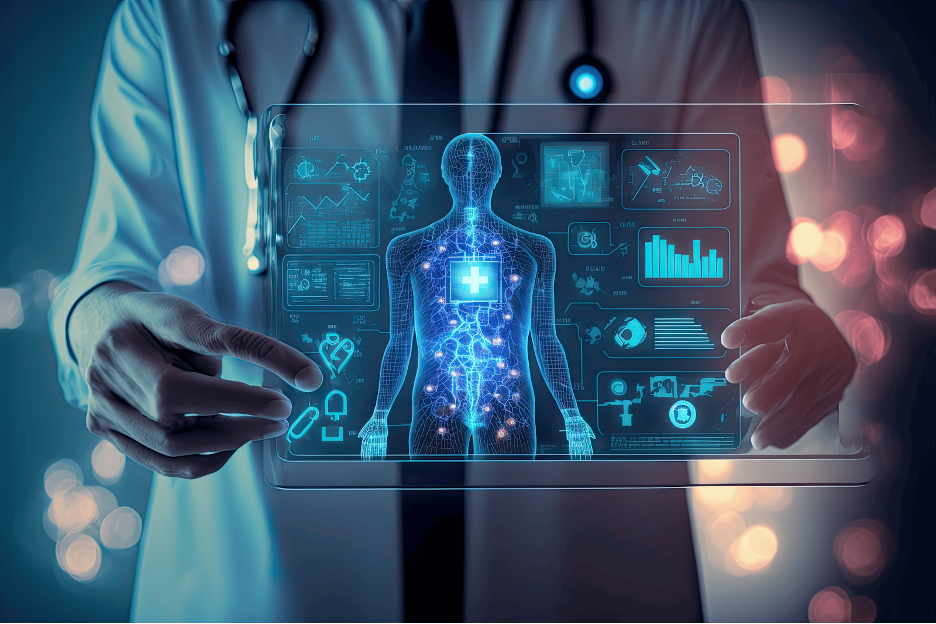
Healthcare Isn’t What It Used to Be
Think about how people dealt with healthcare a few years ago.
You called a clinic to book an appointment.
You carried paper reports from one doctor to another.
If you needed to speak to a specialist who lived far away, you probably had to travel.
Today, things can be very different.
You can book an appointment from your phone, receive a reminder by text, download a medical report, and sometimes even speak to a doctor without leaving home.
For many people, this has become completely normal.
But there’s something we don’t always think about.
Behind all that convenience is a huge amount of technology—and an even bigger responsibility to keep it safe.
That’s where Health & Security come together.
Healthcare is becoming more connected every day, but the information being handled is extremely personal. Medical records, test results, prescriptions, insurance details, and patient identities all need to be protected.
Making healthcare digital is one thing.
Making it safe, reliable, and trustworthy is another.
The Digital Healthcare Shift Is Already Here
Walk into a modern hospital or healthcare facility and you’ll probably notice something.
Computers are everywhere.
Digital patient records have replaced many paper files.
Appointments are managed through software.
Doctors can access information electronically.
Laboratories can send reports digitally.
Even communication between different departments can happen through connected systems.
All of this can save time.
More importantly, it can allow healthcare professionals to spend less time searching for information and more time focusing on patients.
But there’s a catch.
When more information moves online, there are more things that need protection.
Why Patient Information Is So Sensitive
Let’s say someone gets access to your shopping account.
That’s obviously a problem.
But imagine someone getting access to your medical history.
That’s different.
Healthcare information can reveal deeply personal details about a person’s life.
That’s why Patient Data Security isn’t something healthcare organizations can afford to treat as an afterthought.
Hospitals, clinics, laboratories, and other healthcare organizations need to think carefully about who can access information, how it is stored, where it travels, and what happens if something goes wrong.
The goal isn’t to make technology complicated.
It’s to make sure the right information reaches the right person without ending up in the wrong hands.
Healthcare Networks Are Working Behind the Scenes
Patients don’t usually think about networks when they visit a hospital.
They shouldn’t have to.
But networks are quietly carrying information between systems all day.
A doctor may need to access a patient’s digital record.
A laboratory may need to send test results.
A pharmacy system may need to receive prescription information.
Different departments may need to communicate with one another.
All of this depends on reliable Network Services.
When the network works properly, nobody notices.
When it doesn’t, everyone notices.
A slow or unavailable network can turn a simple task into a frustrating one, especially in an environment where time matters.
Cybersecurity Has Become Part of Healthcare
For a long time, cybersecurity sounded like something that belonged to banks, technology companies, and large corporations.
That’s no longer the case.
Healthcare organizations are increasingly targeted because they hold valuable information and depend heavily on digital systems.
This is why Healthcare Cybersecurity has become such an important part of modern healthcare.
It isn’t simply about stopping hackers.
It’s about protecting patient information, keeping systems available, and making sure healthcare professionals can continue doing their jobs.
A cyberattack isn’t just a technical inconvenience when it affects a healthcare organization.
It can disrupt real people and real services.
Telehealth Has Made Healthcare More Accessible
One of the most noticeable changes in healthcare has been the rise of Telehealth.
Instead of travelling across a city for every appointment, some patients can now speak with healthcare professionals remotely.
For someone living far away from a hospital, that can make a huge difference.
For people with busy schedules, it can save time.
For healthcare providers, it can create another way to stay connected with patients.
But remote healthcare comes with its own responsibility.
The conversation is private.
The information is sensitive.
The connection needs to be dependable.
Convenience should never mean giving up privacy.
Cloud Technology Is Changing Healthcare Too
Healthcare organizations deal with enormous amounts of information.
Storing and managing all of it can be challenging.
This is one reason Cloud Computing Solutions are becoming increasingly useful.
Cloud technology can help organizations manage applications, store information, support collaboration, and provide access to systems from different locations.
But moving information to the cloud doesn’t automatically make it secure.
Healthcare organizations still need strong access controls, authentication, backups, monitoring, and appropriate security practices.
The technology may change.
The responsibility doesn’t.
What Happens When a Healthcare System Goes Down?
Imagine arriving at a hospital and discovering that an important digital system isn’t available.
Staff can’t access information as quickly.
Appointments may be delayed.
Communication between departments becomes harder.
Patients start waiting.
Employees become frustrated.
This is why reliability matters just as much as security.
Healthcare organizations need technology that doesn’t simply work most of the time.
They need systems designed to remain dependable when people are relying on them.
That’s where good Digital Infrastructure becomes important.
Technology Should Make Healthcare Feel Easier
There’s a common mistake when organizations adopt new technology.
They sometimes focus too much on what the technology can do and not enough on how people will actually use it.
A new system might have hundreds of features.
But if doctors find it confusing, staff avoid using it, or patients struggle to understand it, what’s the point?
Good healthcare technology should make things simpler.
A patient shouldn’t need to understand a complicated IT system just to book an appointment.
A doctor shouldn’t have to fight with software to find basic information.
Technology should handle the complicated stuff in the background.
People should experience the simplicity.
Security and Accessibility Need to Go Together

There’s another important point.
Digital healthcare should be secure, but it should also be accessible.
Not everyone has the same level of digital knowledge.
Not everyone has a fast internet connection.
Not everyone is comfortable navigating complicated online platforms.
If healthcare is moving online, organizations need to make sure that people aren’t accidentally left behind.
Simple interfaces, clear instructions, accessible services, and reliable connectivity can make a significant difference.
Technology is most useful when it works for everyone—not just people who are already comfortable with it.
What Does Better Health & Security Really Mean?
It doesn’t necessarily mean buying the most expensive technology.
It means getting the basics right.
Protect patient information.
Keep systems available.
Secure the network.
Control access.
Train employees.
Back up important information.
Prepare for unexpected problems.
And, most importantly, remember who all this technology is actually for.
People.
That’s the heart of Health & Security.
Where Technology and Human Care Meet
Technology can help doctors work faster.
It can help patients access services more easily.
It can help hospitals manage enormous amounts of information.
But technology can’t replace the human side of healthcare.
A doctor still needs to listen.
A nurse still needs to care.
A patient still needs reassurance.
The best technology doesn’t remove that human connection.
It supports it.
That’s probably the most important thing to remember as healthcare becomes increasingly digital.
How Sizaf Infocomm Supports Digital Healthcare
As healthcare organizations continue adopting digital tools, having dependable technology underneath them becomes increasingly important.
Sizaf Infocomm provides solutions that can support organizations through:
- Network Services
- Managed IT Services
- Cloud Computing Solutions
- Cybersecurity Solutions
- Digital Infrastructure Management
- Digital transformation support
The idea is simple: technology should help organizations stay connected, secure, and prepared without making everyday operations unnecessarily complicated.
Final Thoughts
Healthcare is changing.
And honestly, that’s a good thing.
Being able to book an appointment online, access records digitally, communicate remotely, or receive healthcare without travelling long distances can make life easier.
But every new digital convenience comes with a responsibility.
We need to protect the information behind it.
We need reliable systems.
We need secure networks.
And we need to make sure technology remains focused on the people using it.
That’s why Health & Security will become even more important as healthcare continues moving into the digital world.
The future isn’t about choosing between technology and human care.
It’s about bringing the two together.
Because the best healthcare technology isn’t the technology people notice.
It’s the technology that quietly works in the background, keeps information safe, keeps services moving, and gives healthcare professionals more time to focus on what really matters people.
Ready to Build a More Secure Healthcare Environment?
If your healthcare organization is exploring secure digital infrastructure, cloud technology, cybersecurity, or reliable network solutions, Sizaf Infocomm can help build technology environments that support better patient care.
Visit: https://sizaf.com
📞 Malaysia: +60 146600012
📞 USA: +1 516 880 9996