
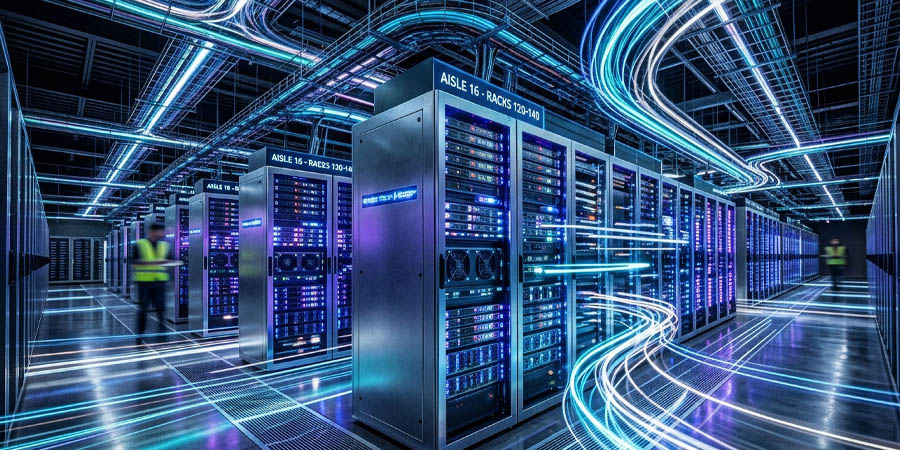
Walk into a modern office and you probably won’t notice the technology infrastructure keeping everything together.
You’ll see people working on laptops.
Someone might be on a video call.
Another employee could be sending an invoice.
A manager might be checking a dashboard.
Customers may be contacting the company through its website.
Everything looks normal.
But behind all of those everyday activities is a complicated layer of technology working quietly in the background.
Servers.
Networks.
Cloud platforms.
Security systems.
Internet connections.
Data storage.
Backup systems.
Connected devices.
Monitoring tools.
Most employees never think about them.
And honestly, that’s usually a good thing.
When IT Infrastructure is working properly, people can focus on their jobs instead of worrying about the technology underneath them.
But when something breaks, everyone suddenly notices.
The internet stops working.
A cloud application becomes unavailable.
Files can’t be accessed.
The company website goes offline.
Employees can’t connect to business systems.
That’s when businesses realize something important:
Technology infrastructure isn’t just supporting the business. It is helping the business operate.
What Is IT Infrastructure?
Let’s remove the technical jargon for a moment.
IT Infrastructure is essentially the collection of technology, systems, equipment, networks, and services that allow a business to operate digitally.
It can include:
- Computers and business devices
- Servers
- Network equipment
- Internet connectivity
- Wi-Fi systems
- Cloud platforms
- Data storage
- Cybersecurity tools
- Backup systems
- Business applications
- Monitoring systems
A small business may have a relatively simple infrastructure.
A larger organization may have multiple offices, cloud environments, servers, thousands of devices, and complex security requirements.
There isn’t one infrastructure that works for everyone.
The right setup depends on how the business operates.
The Network Is the Business’s Digital Road System

Think about a city.
Roads connect homes, offices, warehouses, shops, airports, and other locations.
Without roads, movement becomes difficult.
A business network works in a similar way.
Network Infrastructure connects employees, devices, applications, offices, and digital services.
When the network works well, information can move efficiently.
Employees can access cloud applications.
Teams can communicate.
Files can be shared.
Customers can interact with digital services.
Connected devices can send information.
But when the network becomes overloaded, poorly designed, or unreliable, the effects can spread quickly.
A small network issue can become a business-wide problem.
That’s why network design isn’t simply about connecting computers.
It’s about creating a reliable digital environment for the organization.
Cloud Technology Has Changed the Infrastructure Equation
Not that long ago, businesses often kept most of their technology inside their own offices.
Servers sat in dedicated rooms.
Files were stored locally.
Applications were installed on individual computers.
Today, that’s no longer the only model.
Cloud Infrastructure has changed the way businesses access technology.
Companies can use cloud services for:
- File storage
- Business applications
- Collaboration
- Data analytics
- Communication
- Backup
- Customer management
- Remote access
This can provide flexibility, particularly for businesses with employees working from different locations.
But cloud technology doesn’t eliminate infrastructure.
It changes it.
Businesses still need reliable connectivity, secure access, identity management, devices, monitoring, and appropriate data protection.
Moving to the cloud doesn’t mean infrastructure disappears.
It simply becomes more connected and distributed.
Business Connectivity Is Becoming Essential
Imagine an employee trying to access a cloud application.
The application itself is working.
The employee’s laptop is working.
But the internet connection is unstable.
The employee can’t do much.
This is why Business Connectivity has become such an important part of modern infrastructure.
Companies increasingly depend on the internet for everyday operations.
Customer communication.
Cloud applications.
Online payments.
Remote work.
Digital marketing.
Video meetings.
Data transfer.
Without reliable connectivity, many of these activities become difficult.
The internet connection may not be the most visible part of the business, but it can have a significant impact on productivity.
Cybersecurity Is Part of Infrastructure, Not an Add-On
As businesses become more connected, security becomes increasingly important.
Every connected device creates another point that needs to be managed.
Every user account requires appropriate access controls.
Every cloud application needs to be considered within the wider security environment.
This is why Data Security and Cybersecurity should be built into infrastructure planning.
Modern businesses may use:
- Firewalls
- Endpoint protection
- Multi-factor authentication
- Access controls
- Encryption
- Network monitoring
- Secure backups
- Security policies
The objective isn’t to make technology impossible to use.
It’s to create a balance between accessibility and protection.
Employees need access to the systems they require.
At the same time, sensitive information needs to be protected from unauthorized access.
The Growing Challenge of Too Many Devices

Walk around a modern office and count the connected devices.
Laptops.
Phones.
Printers.
Cameras.
Meeting-room equipment.
Smart devices.
Security systems.
IoT sensors.
There may be far more connections than you initially realize.
The Internet of Things (IoT) is adding even more connected devices to business environments.
These devices can provide useful information and automate processes.
But they also increase the complexity of the network.
Businesses need to know what devices are connected, who controls them, what information they collect, and whether they’re properly secured.
More devices mean more things to manage.
Why Backup Infrastructure Matters
Here’s a question every business should ask:
What happens if something goes wrong?
A server can fail.
A device can be damaged.
A cyber incident can affect data.
An employee can accidentally delete an important file.
An internet connection can go down.
This is why Data Backup and Recovery are important parts of technology infrastructure.
A backup is useful only if it can actually be recovered when needed.
Businesses should therefore think about both backup and recovery.
The goal isn’t simply to have copies of data somewhere.
The goal is to be able to restore important information and continue operating after an unexpected event.
IT Infrastructure Needs Monitoring
Imagine owning a car but never checking the engine, tyres, fuel, or warning lights.
You might get lucky.
But eventually, something could go wrong.
Technology infrastructure needs similar attention.
IT Infrastructure Management and monitoring can help businesses understand the condition of their systems.
Monitoring can provide visibility into:
- Network performance
- Device health
- Server activity
- Storage capacity
- Security events
- Connectivity
- System availability
This allows problems to be identified earlier.
Instead of waiting for employees to say, “The system isn’t working,” businesses can sometimes identify warning signs before they become major disruptions.
AI Is Changing Infrastructure Requirements
Artificial intelligence is becoming part of more business workflows.
Companies are experimenting with AI for customer support, analytics, content, automation, document processing, forecasting, and other tasks.
But AI isn’t just a software decision.
It can also affect infrastructure.
Businesses may need to think about:
- Data availability
- Network capacity
- Cloud resources
- Security
- Storage
- Computing requirements
An organization that wants to expand its use of AI should therefore consider whether its existing Technology Infrastructure can support those plans.
The smartest approach isn’t necessarily buying the most powerful equipment.
It’s understanding the workload first.
Why Infrastructure Should Be Built for Growth
Imagine a business with 15 employees.
Its current network works perfectly.
Then the company grows.
Twenty employees become forty.
One office becomes two.
More cloud applications are introduced.
More devices are connected.
Remote work becomes more common.
Suddenly, the infrastructure that seemed perfect a year ago starts showing limitations.
This is why Scalable IT Infrastructure matters.
Businesses should think about where they’re going rather than only where they are today.
Infrastructure should ideally make growth easier—not become another obstacle to it.
The Human Side of Technology Infrastructure
It’s easy to talk about servers, networks, cloud systems, and cybersecurity as if infrastructure is purely technical.
But there are people behind every system.
Employees depend on technology to do their jobs.
Customers depend on businesses to keep services available.
Managers depend on accurate information to make decisions.
That’s why infrastructure decisions should ultimately be connected to human needs.
A technically impressive system isn’t automatically a good system.
If employees can’t use it easily, if customers experience unnecessary delays, or if the business can’t maintain it properly, something has gone wrong.
Technology should make work easier—not make it more complicated.
The Cost of Ignoring IT Infrastructure

Infrastructure problems don’t always arrive dramatically.
Sometimes they appear as small annoyances.
A slow application.
An unreliable Wi-Fi connection.
A computer that keeps disconnecting.
A server running out of storage.
Employees spending time troubleshooting instead of working.
Individually, these problems may not seem serious.
But over months, they can add up.
Lost productivity costs money.
Downtime costs money.
Security incidents cost money.
Replacing outdated systems unexpectedly can cost money.
This is why investing in IT Infrastructure Services can be more valuable than simply reacting to problems when they appear.
What Should Businesses Look at First?
Businesses don’t necessarily need to replace everything at once.
A better approach is to understand the current environment.
Start by asking:
Is the Network Reliable?
Look at connectivity, Wi-Fi coverage, bandwidth, and network performance.
Are Systems Secure?
Review access controls, security tools, devices, and data protection.
Is Important Data Backed Up?
Make sure critical information can be recovered.
Are Cloud Services Being Used Effectively?
Review whether cloud applications are helping or creating unnecessary complexity.
Can the Infrastructure Support Growth?
Consider future employees, locations, applications, and connected devices.
Is Anyone Monitoring the Environment?
Problems are easier to manage when businesses have visibility into their technology.
These questions can reveal weaknesses without requiring a complete technology overhaul.
The Future of Business Infrastructure
The next generation of business infrastructure will be more connected than ever.
Cloud platforms will continue to expand.
AI will become part of more workflows.
IoT devices will increase.
Remote work will remain important for many organizations.
Cybersecurity requirements will become more sophisticated.
Networks will need to support more data and more devices.
That means businesses will need infrastructure that is:
Reliable
Secure
Scalable
Connected
Manageable
Adaptable
The companies that plan their infrastructure carefully will be better positioned to adopt new technology without constantly rebuilding their foundation.
Final Thoughts
Most people don’t think about what happens behind the screen.
They shouldn’t have to.
When an employee opens an application, they expect it to work.
When a customer visits a website, they expect it to load.
When a business sends an email, it expects the message to arrive.
When someone accesses a cloud system, they expect their information to be available.
All of those simple expectations depend on a complicated technology layer working quietly in the background.
That’s the real importance of Tech Infrastructure Services.
It’s not about technology for the sake of technology.
It’s about creating a dependable foundation that allows people and businesses to work, communicate, serve customers, protect information, and grow.
Because sometimes the most important technology is the technology nobody notices.
When everything works, you simply get the work done.
How Sizaf Infocomm Can Help
At Sizaf Infocomm, we understand that modern businesses need more than individual technology products.
They need a connected technology environment that supports everyday operations and future growth.
Our solutions include Tech Infrastructure Services, Managed IT Services, Network Solutions, Business Connectivity, Cloud Computing, Cybersecurity, and other technology services designed around business requirements.
Whether you’re improving an existing infrastructure or preparing your business for its next stage of growth, having the right technology foundation can make the journey much easier.
Get in Touch with Sizaf Infocomm
Malaysia: +60 146600012
USA: +1 516 880 9996
Website: https://sizaf.com