Imagine starting your workday and finding that everything simply works.
Your employees can access their applications. Emails are running normally. The network is stable. Files are available. Security systems are active. Cloud platforms are accessible.
Nobody has to spend the morning asking, “Why isn’t this working?”
That is the kind of experience modern businesses expect from their technology.
But keeping IT systems running smoothly is not always simple. Businesses now depend on cloud applications, networks, remote employees, cybersecurity tools, business software, connected devices, and digital communication platforms.
As technology becomes more important, managing it becomes more complicated.
This is where Managed IT Services can play an important role.
Instead of waiting for technology problems to interrupt the business, managed IT focuses on continuously supporting, monitoring, maintaining, and improving the technology environment.
What Are Managed IT Services?
Managed IT Services involve the ongoing management and support of a business’s technology environment.
Depending on the business, managed IT may cover areas such as:
- IT support
- Network management
- Cybersecurity
- Cloud services
- Device management
- System monitoring
- Software updates
- Data backup
- Disaster recovery
- Infrastructure management
- Technical troubleshooting
The exact services can vary depending on the organisation’s requirements.
A small business may need help managing computers, networks, cloud applications, and security.
A larger organisation may require more advanced infrastructure monitoring, cybersecurity, cloud management, and multi-location support.
The important difference is that managed IT is generally an ongoing approach, rather than waiting until something breaks.
Why Businesses Are Moving Toward Managed IT
Technology problems rarely arrive at a convenient time.
A network can fail during an important meeting.
A server can develop a problem during a busy working day.
A software issue can prevent employees from completing their work.
A security incident can affect multiple systems at once.
When businesses handle IT only when something goes wrong, technical teams can spend much of their time reacting to emergencies.
Managed IT takes a more proactive approach.
Systems can be monitored regularly, updates can be planned, security can be reviewed, and potential issues can be identified earlier.
The objective is simple: reduce avoidable disruption and keep technology aligned with business needs.
IT Monitoring Can Identify Problems Earlier
One of the most useful aspects of managed IT is continuous monitoring.
Instead of discovering a problem only after employees report it, monitoring systems can keep an eye on important infrastructure.
This may include:
- Network devices
- Servers
- Computers
- Cloud systems
- Storage
- Applications
- Security events
- Connectivity
For example, if a server begins showing unusual resource usage, an IT team may be able to investigate before the system becomes unavailable.
If storage is approaching capacity, additional resources can be planned.
If a device stops communicating with the network, technical teams can investigate the reason.
Early visibility can make IT problems easier to manage.
Cybersecurity Is a Major Part of Managed IT
Businesses are increasingly dependent on digital systems.
That also means they need to take cybersecurity seriously.
A modern IT environment can include laptops, smartphones, cloud applications, servers, wireless networks, remote users, and connected devices.
Every connected system needs appropriate protection.
Managed IT Services can support security through activities such as:
- Security monitoring
- Software patching
- Access management
- Endpoint protection
- Firewall management
- Backup management
- Security awareness
- Threat monitoring
- Incident response planning
Cybersecurity is not a single product that can simply be installed and forgotten.
It is an ongoing process.
Cloud Management Is Becoming More Important
Cloud applications have become a normal part of business operations.
Companies may use cloud platforms for email, file storage, accounting, collaboration, customer management, communication, and many other activities.
But using cloud services does not mean businesses no longer need IT management.
Someone still needs to think about:
- User access
- Security
- Permissions
- Data protection
- Backups
- Application performance
- Integration
- Cost management
Managed IT support can help businesses keep their cloud environment organised and secure as usage grows.
Remote Work Has Changed IT Support
Employees may no longer work from a single office.
They might work from home, a customer location, a shared workspace, or while travelling.
This changes the way IT teams support users.
A traditional approach based around physically visiting someone’s desk is not always practical.
Managed IT environments can use remote monitoring and support tools to help technical teams troubleshoot devices and systems without always needing to be physically present.
This can make support more flexible for distributed teams.
Software Updates Are More Important Than They Look
Software updates can sometimes feel like an inconvenience.
Employees may postpone them because they are busy.
But outdated software can create security and compatibility problems.
Operating systems, applications, network devices, security tools, and other technologies may require regular updates.
Managed IT services can help organisations establish a more structured approach to patching and updates.
The objective is not simply to install every update immediately.
It is to manage updates in a controlled way while reducing unnecessary risks and disruption.
Backup and Disaster Recovery Protect Business Continuity
What happens if important business data disappears?
The cause could be accidental deletion, hardware failure, software problems, a cyber incident, or another unexpected event.
Without reliable backups, recovering that information can be difficult.
Managed IT can help businesses establish appropriate backup processes and recovery plans.
This is especially important for organisations that depend heavily on digital information.
A backup is only useful if it can actually be restored when needed.
That is why recovery testing and planning are important parts of business continuity.
Managed IT Can Help Businesses Control Technology Complexity
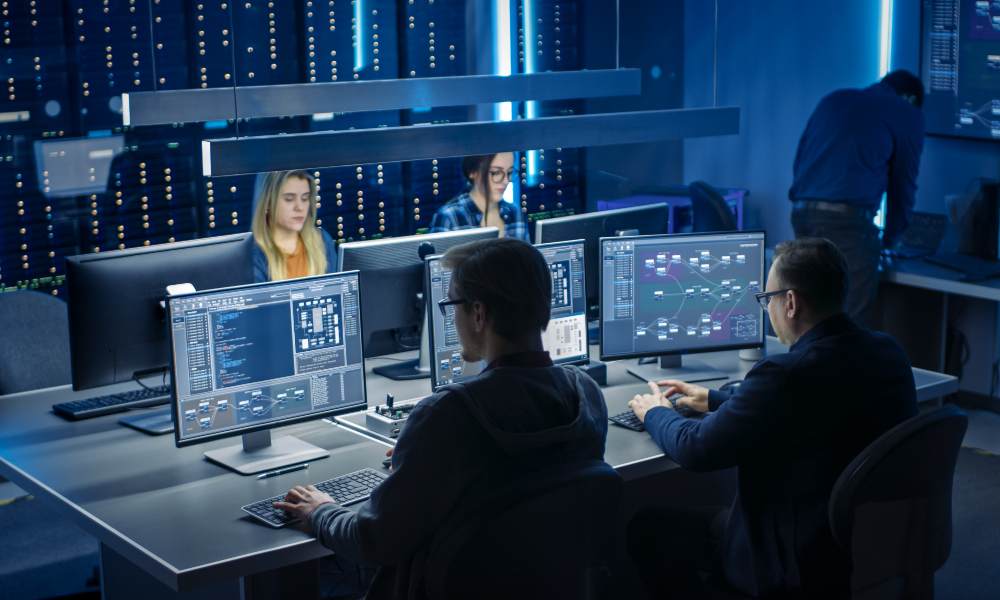
Technology tends to grow over time.
A business starts with a few computers.
Then it adds cloud applications.
Then more employees join.
Then the company opens another location.
Then additional security tools, devices, software, and systems are introduced.
Eventually, the technology environment can become complicated.
Without proper management, businesses may end up with systems that are difficult to understand and maintain.
Managed IT can bring more structure to this environment by helping businesses monitor systems, document infrastructure, manage devices, and plan technology changes.
Managed IT and Business Growth
Technology should support growth rather than become a limitation.
When a company hires new employees, IT needs to provide devices and access.
When a company opens a new location, networking requirements change.
When applications move to the cloud, connectivity and security requirements evolve.
When customer demand increases, systems may need additional capacity.
Managed IT can help businesses plan these changes rather than treating every change as an emergency.
This is especially useful for growing businesses that may not want to build a large internal IT department immediately.
The Human Side of Managed IT
Managed IT is not only about technology.
It is also about people.
Employees need quick access to the tools they use every day.
Managers need confidence that important systems are being maintained.
Customers expect digital services to work reliably.
Business owners need to understand where technology risks exist.
Good IT support should therefore be understandable and practical.
Employees should not need to understand servers, networks, cloud architecture, or cybersecurity to get their work done.
That complexity should be managed in the background as much as possible.
What Should Businesses Look for in Managed IT Services?
Before choosing a managed IT provider, businesses should look beyond a list of services.
Consider questions such as:
What is actually being monitored?
Understand which systems, devices, applications, and networks are covered.
How is cybersecurity handled?
Ask how security monitoring, updates, access controls, and incident response are managed.
Is support proactive?
A provider should ideally identify potential problems rather than only respond after something breaks.
How are backups managed?
Understand what is backed up, where it is stored, and how recovery is tested.
Can the service scale?
Technology requirements can change as the business grows.
Is communication clear?
Businesses should know who to contact and how technical problems are handled.
The Future of Managed IT Services
Managed IT is also changing as technology becomes more intelligent.
AI-assisted monitoring can help identify unusual behaviour.
Automation can handle repetitive IT tasks.
Cloud platforms are becoming increasingly important.
Cybersecurity is becoming more integrated with network and infrastructure management.
Businesses are also using more connected devices and distributed systems.
All of this means IT environments are becoming more complex.
Managed IT Services will increasingly focus on helping businesses manage that complexity while keeping technology secure, reliable, and aligned with business objectives.
Final Thoughts
Modern businesses cannot afford to treat IT as something that only matters when there is a problem.
Technology is part of everyday operations.
Employees depend on it. Customers interact with it. Business data runs through it. Communication relies on it.
Managed IT Services provide a structured way to maintain and support that technology environment.
The goal isn’t simply to fix computers faster.
It is to create a more reliable technology environment where problems can be identified earlier, security can be managed continuously, systems can be maintained properly, and businesses can focus more of their attention on what they actually do.
When IT works quietly in the background, the business can concentrate on moving forward.
How Sizaf Infocomm Can Help
Modern businesses need reliable IT management to support network infrastructure, cloud services, cybersecurity, devices, connectivity, monitoring, and everyday digital operations.
Sizaf Infocomm provides technology solutions designed around the changing IT and connectivity requirements of modern businesses.
Malaysia: +60 146600012
USA: +1 516 880 9996