
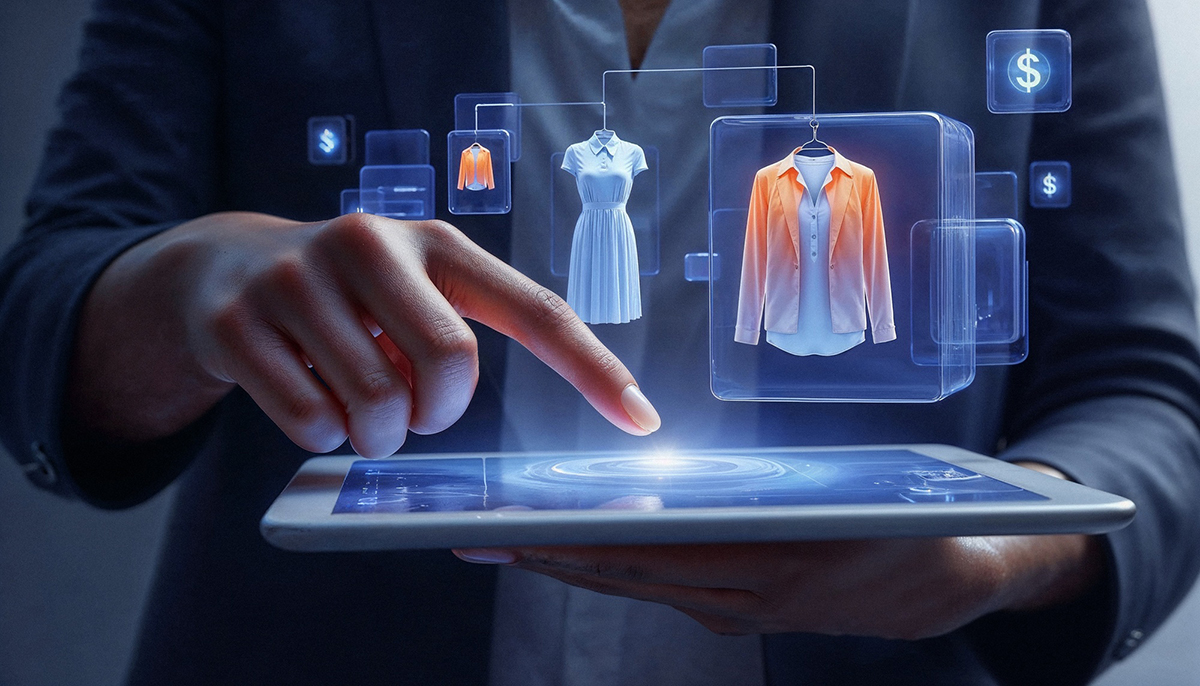
Open two online shopping websites.
Both sell similar products.
Both have reasonable prices.
Both look professional.
But somehow, you end up buying from one of them.
Why?
It may not be the price.
It may be the website experience, faster delivery, easier payment, better product information, customer reviews, or simply the feeling that one store understands what you need.
That is the interesting part of modern Retail & Ecommerce.
Selling something online is no longer just about putting a product on a website and waiting for someone to click “Buy.”
Customers have become more careful, more informed and, honestly, much harder to impress.
And technology is changing almost every part of that buying journey.
Customers Don’t Just Buy Products Anymore
Think about the last time you bought something online.
You probably didn’t start with a specific store.
You searched.
You compared prices.
You checked reviews.
You looked at pictures.
Maybe you watched a product video.
Then you checked delivery time.
Perhaps you compared the same product on two or three different platforms.
Only after all that did you make a decision.
This is why customer experience has become one of the biggest competitive advantages in ecommerce.
The product still matters.
But everything around the product matters too.
A slow website, confusing navigation or complicated checkout can be enough to make a customer leave.
The Online Store Is Now Part of the Brand
A physical store has its shelves, lighting, staff and layout.
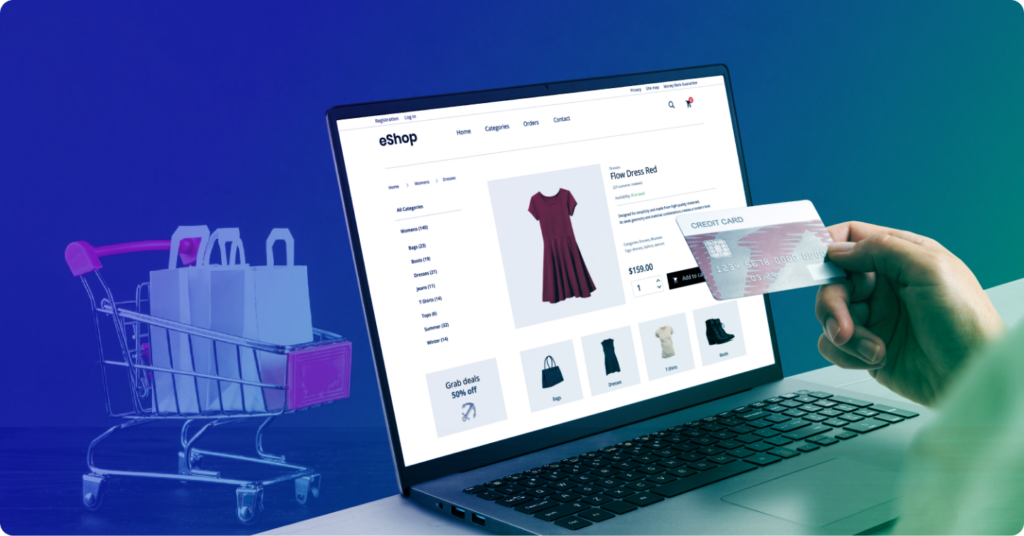
An ecommerce store has something different: its digital experience.
The website becomes the shop window.
The product page becomes the salesperson.
The checkout page becomes the cashier.
The delivery notification becomes part of the customer service experience.
Even the confirmation email becomes part of the brand.
This means ecommerce website design isn’t simply about making a website look attractive.
It needs to make shopping feel easy.
Customers should quickly understand:
- What is being sold
- How much it costs
- Whether it is available
- When it will arrive
- How they can pay
- What happens if they want to return it
The fewer questions customers have, the easier it becomes for them to purchase.
Personalization Is Changing Online Shopping
Have you ever searched for something online and then suddenly started seeing similar products everywhere?
That’s personalization at work.
Modern ecommerce personalization allows retailers to create experiences based on customer behaviour and preferences.
A returning customer might see products related to previous purchases.
Someone searching for sports equipment might receive recommendations around fitness products.
A customer who frequently buys skincare products may see relevant new arrivals.
Done properly, personalization can make online shopping feel less like browsing a massive catalogue and more like receiving useful suggestions.
But there is a line.
Customers want convenience.
They don’t want to feel uncomfortable about how much a company knows about them.
That makes data privacy and responsible data handling extremely important for modern retailers.
AI Is Becoming a Shopping Assistant

Artificial intelligence is also changing ecommerce.
But perhaps the most interesting development isn’t simply AI-generated content.
It’s how AI can help customers find what they actually want.
Imagine typing:
“I need comfortable shoes for walking, but I don’t want anything too expensive.”
Instead of manually filtering hundreds of products, an AI-powered shopping assistant could understand the request and recommend suitable options.
AI can also help retailers with:
- Product recommendations
- Customer support
- Inventory forecasting
- Search improvement
- Demand prediction
- Fraud detection
- Product descriptions
- Customer behaviour analysis
For retailers, this can reduce repetitive work.
For customers, it can make shopping faster.
And when both sides benefit, technology becomes genuinely useful rather than just another buzzword.
The Checkout Experience Can Make or Break a Sale
Here’s something ecommerce businesses sometimes underestimate.
A customer can spend ten minutes choosing a product and then leave in thirty seconds.
Why?
The checkout process.
Maybe the website asks for too much information.
Maybe the preferred payment method isn’t available.
Maybe delivery charges appear unexpectedly.
Maybe the page takes too long to load.
Or perhaps the customer simply doesn’t trust the payment process.
This is why secure online payments and simple checkout experiences are so important.
Customers want to know that their money and personal information are safe.
A smooth checkout doesn’t draw attention to itself.
And that’s exactly the point.
It simply works.
Fast Delivery Has Changed Customer Expectations

Online shopping has also changed what people consider “fast.”
Years ago, waiting several days for a delivery was normal.
Today, customers often expect much quicker fulfilment.
This puts pressure on retailers to improve more than just their websites.
Behind the scenes, ecommerce depends on:
Inventory systems.
Warehousing.
Order management.
Logistics.
Real-time tracking.
Reliable connectivity.
A customer may only see a “Your order has shipped” notification.
But behind that simple message is an entire technology ecosystem.
This is where digital supply chain technology becomes increasingly important.
Physical Stores Aren’t Disappearing
There is an interesting misconception that ecommerce will completely replace traditional retail.
Reality is more complicated.
Many customers still want to see, touch and experience products physically.
At the same time, they may research those products online before visiting a store.
This has created a more connected retail model known as omnichannel retail.
A customer might:
Search online → visit a store → compare prices on their phone → purchase through an app → receive the product at home.
The online and offline worlds are no longer completely separate.
They’re becoming part of the same customer journey.
Social Media Has Become Part of Shopping
Social media used to be mainly about sharing photos, videos and opinions.
Now it can also influence what people buy.
A short product video can introduce something to thousands of potential customers.
A creator can demonstrate how a product works.
A customer review can build confidence.
A viral post can suddenly create demand for a product that nobody was searching for yesterday.
This is why social commerce and creator marketing are becoming important parts of modern retail strategies.
The interesting thing is that customers don’t always discover products because they are looking for them.
Sometimes the product finds them.
Cybersecurity Is No Longer Optional
There is another side to ecommerce that customers may never see.
Security.
Retailers handle names, addresses, phone numbers, payment information, order histories and other customer data.
That makes ecommerce platforms attractive targets for cybercriminals.
A security problem can create financial losses, operational disruption and something even harder to recover: customer trust.
Strong ecommerce cybersecurity, secure networks, controlled access, software updates, monitoring and responsible data management are therefore essential.
Customers may never ask a retailer about its network infrastructure.
But they expect that infrastructure to protect their information.
The Future of Retail Will Feel More Personal
The future of Retail & Ecommerce probably won’t be defined by one single technology.
It will be the combination of many technologies working quietly together.
AI may understand customer needs.
Cloud platforms may manage data and applications.
IoT devices may improve inventory tracking.
Analytics may reveal changing buying patterns.
Automation may speed up fulfilment.
Secure networks may keep everything connected.
And human teams will still make the decisions that technology cannot replace.
Because at the end of the day, shopping is still human.
People want convenience.
They want value.
They want trust.
They want quick answers.
And they want to feel confident about the decisions they make.
The Real Goal Isn’t More Technology. It’s Less Friction.
This may be the biggest lesson for retailers.
Customers don’t necessarily care how advanced your technology is.
They care whether the website loads quickly.
Whether the product is available.
Whether payment works.
Whether delivery arrives when promised.
Whether support responds when something goes wrong.
Whether the company protects their information.
In other words, customers don’t want to experience your technology.
They want to experience a better way to shop.
That is where the future of Retail & Ecommerce is heading.
Technology will continue becoming smarter in the background, while the best customer experiences will feel remarkably simple in the foreground.
How Sizaf Infocomm Supports Connected Retail
Behind every successful ecommerce experience is reliable digital infrastructure.
Websites, payment systems, cloud applications, inventory platforms, customer support and online communication all depend on stable connectivity and technology.
SIZAF NET WITH TECH provides technology and connectivity solutions designed to support the changing needs of modern organisations, businesses and digital operations.
For retailers looking to build reliable digital operations, Network Solutions, Managed IT Services, secure connectivity and scalable technology infrastructure can play an important role in keeping everyday operations connected.
Malaysia: +60 146600012
USA: +1 516 880 9996