For generations, farming has depended on something no farmer can completely control: the weather.
A little too much rain can damage crops.
Too little rain can create drought conditions.
An unexpected heatwave can affect harvests.
A sudden storm can destroy weeks or months of work.
Farmers have always learned to adapt. They watch the sky, understand their land, study seasons, and rely heavily on experience.
But the climate is becoming harder to predict.
At the same time, agriculture needs to produce enough food for a growing population while using resources such as water, land, energy, and fertilizers more responsibly.
This is where Smart Agriculture is becoming increasingly important.
Technology isn’t replacing the knowledge of farmers.
Instead, it’s giving them more information to make better decisions.
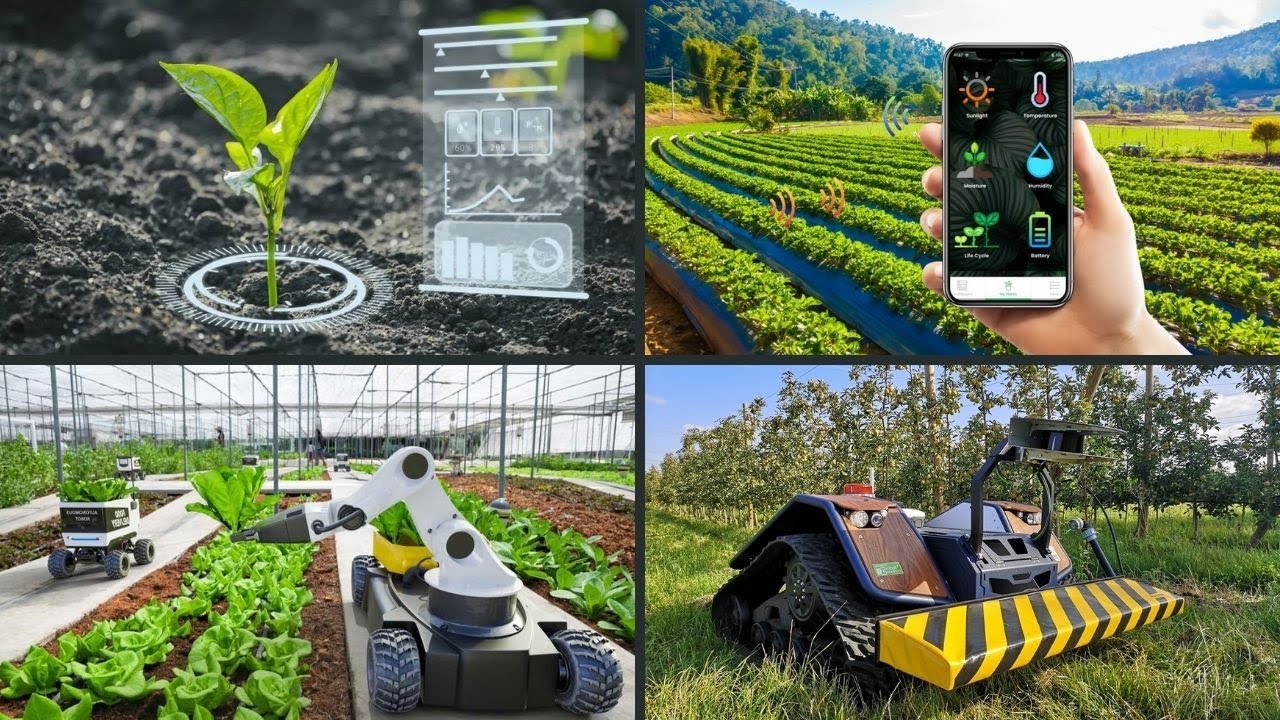
Sensors can measure soil conditions.
Satellites can monitor fields.
Weather systems can provide detailed forecasts.
Artificial intelligence can analyze large amounts of agricultural data.
Connected devices can monitor crops, livestock, and equipment.
And digital platforms can help farmers access information without having to be physically everywhere at once.
The result is a different kind of farming—one that is increasingly connected, data-driven, and prepared for uncertainty.
1. Smart Agriculture Helps Farmers Understand Their Fields Better
Walk through a large farm and the land may look relatively uniform.
But underneath the surface, conditions can vary significantly.
One area might have enough moisture.
Another might be too dry.
Some parts of a field may have healthy crops, while others may be struggling.
Traditionally, identifying these differences often required physical inspection.
Today, Precision Agriculture technologies can provide much more detailed information.
Soil sensors, satellite imagery, drones, and connected agricultural equipment can help identify variations across fields.
This allows farmers to make decisions based on what is actually happening rather than treating the entire farm as one identical area.
That can lead to more efficient use of water, fertilizers, and other resources.
2. IoT Sensors Are Bringing Real-Time Information to Farms
The Internet of Things (IoT) isn’t limited to smart homes and connected offices.
It is also becoming increasingly useful in agriculture.
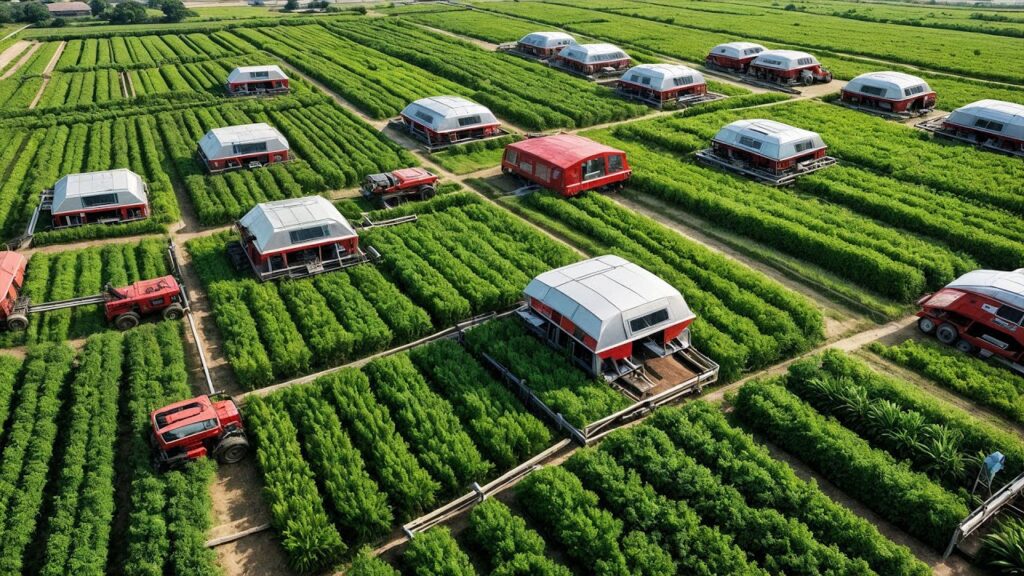
Farmers can use connected sensors to monitor things such as:
- Soil moisture
- Temperature
- Humidity
- Water levels
- Crop conditions
- Equipment performance
- Environmental conditions
Imagine a farmer who doesn’t have to manually check every part of a field to know where water is needed.
A sensor can provide information about soil moisture.
If certain areas become too dry, the farmer can investigate and respond.
This can make irrigation more targeted and potentially reduce unnecessary water consumption.
The technology doesn’t replace the farmer’s decision.
It gives the farmer better information before making it.
3. Weather Technology Is Becoming a Farming Tool
Weather has always influenced agriculture.
But modern technology is giving farmers access to more detailed information than simply knowing whether tomorrow will be sunny or rainy.
Advanced Weather Monitoring systems can provide information about:
- Rainfall
- Temperature
- Wind
- Humidity
- Storm conditions
- Heat levels
- Soil conditions
When this information is combined with historical agricultural data, farmers can make more informed decisions about planting, irrigation, harvesting, and crop protection.
For example, knowing that unusually heavy rainfall may be approaching can help a farmer prepare fields or adjust plans.
A weather forecast won’t eliminate risk.
But better information can make risk easier to manage.
4. AI Is Helping Agriculture Make Sense of Complex Data
Agriculture generates an enormous amount of information.
Weather data.
Soil measurements.
Crop images.
Historical yields.
Market information.
Water usage.
Equipment data.
For a person to analyze all of this manually would be extremely difficult.
This is where AI in Agriculture can be useful.
Artificial intelligence can identify patterns within large datasets and help provide insights.
For example, AI-powered systems can potentially help identify signs of crop stress from images or recognize patterns that may indicate changes in field conditions.
Farmers can then combine those insights with their own experience.
And that human element remains important.
A farmer understands the local environment in a way that a computer model cannot fully replicate.
The strongest approach is therefore not technology versus traditional knowledge.
It’s technology plus experience.
5. Smarter Water Management Is Becoming Essential
Water is one of the most important resources in agriculture.
It’s also one of the areas where technology can make a meaningful difference.
Traditional irrigation methods may sometimes apply water across an entire area even when different parts of a field have different needs.
With Smart Irrigation systems, farmers can use information from soil sensors, weather forecasts, and crop requirements to make irrigation decisions more precisely.
This can help reduce unnecessary water use.
In areas experiencing water stress, even small improvements can matter.
Technology can help answer a simple but important question:
Where is water actually needed?
That information can make irrigation more efficient.
6. Technology Is Helping Build Climate-Smart Agriculture
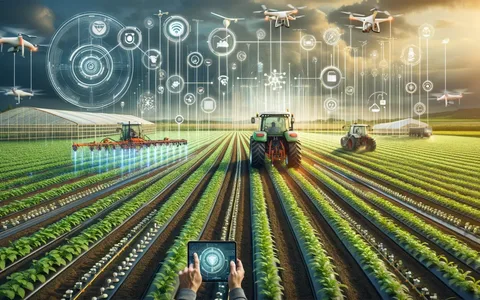
The idea behind Climate-Smart Agriculture is relatively straightforward.
Agriculture needs to continue producing food while becoming more resilient to changing climate conditions and reducing environmental impact where possible.
Technology can support this in several ways.
Farmers can use data to improve resource management.
Connected systems can reduce unnecessary water usage.
Precision tools can help optimize fertilizer application.
Weather technology can support better planning.
Remote monitoring can reduce the need for unnecessary travel across large farms.
None of these solutions is a magic answer to climate challenges.
But together, they can help create agricultural systems that are more adaptable.
7. Fisheries Are Becoming More Technology-Driven Too
Technology isn’t only changing farming.
The fisheries sector is also finding new ways to use digital tools.
Fisheries can benefit from technologies such as:
- GPS tracking
- Weather monitoring
- Water-quality sensors
- Satellite data
- Digital catch records
- Connected equipment
- Data analytics
For example, monitoring water conditions can help identify changes that could affect aquatic ecosystems.
Fishermen can also use weather and navigation technologies to make better-informed decisions before and during trips.
In aquaculture, connected sensors can monitor conditions such as water temperature, oxygen levels, and other environmental factors.
This can help operators respond to problems more quickly.
The Importance of Digital Connectivity in Agriculture
There is one thing almost all these technologies have in common.
Connectivity.
A sensor is useful because it can send information.
A remote monitoring system works because data can be transferred.
A cloud platform is accessible because there is a network connecting the user to it.
This makes Digital Connectivity increasingly important for modern agriculture.
However, not every farming area has the same level of connectivity.
Rural and remote locations can face challenges involving broadband access, mobile coverage, infrastructure, and reliable internet services.
As agriculture becomes more digital, improving connectivity in rural areas will become increasingly important.
Technology Can Help Reduce Waste
Food production doesn’t end when crops are harvested.
There are also storage, transportation, processing, and distribution stages.
Problems at any point can lead to waste.
Digital technology can help businesses monitor storage conditions, track inventory, improve transportation planning, and identify potential problems earlier.
For temperature-sensitive products, connected sensors can help monitor environmental conditions throughout storage and transportation.
Better information can help businesses act before products are damaged.
That matters not only financially but environmentally as well.
Resources were used to produce that food.
Reducing waste means getting more value from those resources.
The Human Side of Smart Farming Still Matters
With all the discussion about AI, sensors, satellites, and automation, it’s easy to imagine a future where farming is completely controlled by technology.
That’s unlikely—and probably shouldn’t be the goal.
Agriculture is deeply connected to local conditions.
A farmer knows the land.
They understand seasonal patterns.
They notice changes that may not immediately appear in a dashboard.
They know how crops respond to local conditions.
Technology provides information.
Farmers provide context.
That’s why the future of agriculture isn’t about replacing human knowledge.
It’s about giving farmers better tools to combine with that knowledge.
What Are the Challenges of Smart Agriculture?
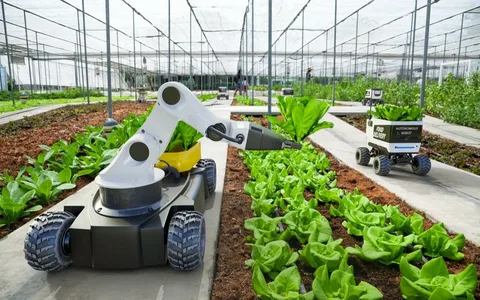
Smart agriculture has enormous potential, but adopting technology isn’t always simple.
The first challenge is cost.
Sensors, connectivity, software, equipment, and digital platforms can require investment.
Then there is the question of training.
Technology is only useful when people understand how to use it.
Connectivity is another major issue, particularly in rural and remote areas.
There are also concerns around cybersecurity and data ownership.
Who owns agricultural data?
Who can access it?
How should it be protected?
These questions will become increasingly important as farms become more connected.
The Future of Agriculture Will Be More Connected
Agriculture is entering an interesting period.
The future isn’t necessarily about replacing traditional farming with machines.
It’s about combining experience with information.
A farmer may use satellite imagery to understand crop conditions.
A sensor may report soil moisture.
AI may identify a potential problem.
A weather system may provide an early warning.
And the farmer can use all of that information to decide what should happen next.
That’s the real strength of Smart Farming.
Technology doesn’t make the decision by itself.
It helps people make better decisions.
Final Thoughts
Agriculture has always been about adapting.
Farmers have adapted to changing seasons, new crops, new markets, and new challenges for generations.
Climate change is creating another major challenge.
But technology is providing new ways to respond.
Smart Agriculture, Precision Agriculture, IoT in Agriculture, AI in Agriculture, weather monitoring, connected fisheries, and smarter water management are helping create a more informed approach to food production.
There won’t be one technology that solves every agricultural problem.
And technology alone cannot solve climate change.
But when digital tools are combined with agricultural knowledge, responsible resource management, and practical experience, they can make a real difference.
The future of farming may be more digital.
But at its heart, it will still depend on the people who understand the land, the water, the seasons, and the communities they serve.
How Sizaf Infocomm Can Help
As agriculture, fisheries, and climate-related industries become more connected, reliable technology infrastructure becomes increasingly important.
At Sizaf Infocomm, we support businesses and organizations with Managed IT Services, Network Solutions, Business Connectivity, Cloud Computing, Cybersecurity, and technology infrastructure solutions.
Reliable connectivity and secure digital systems can help organizations make better use of modern technologies while keeping their operations connected and ready for the future.
Get in Touch with Sizaf Infocomm
Malaysia: +60 146600012
USA: +1 516 880 9996
Website: https://sizaf.com