
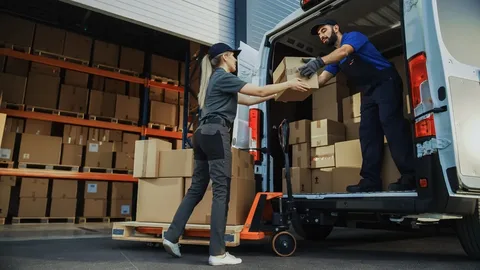
A package leaves a warehouse.
A truck picks it up.
It travels across a city, perhaps across a country, and eventually reaches a customer’s doorstep.
To the customer, it may look simple.
Click. Order. Wait. Receive.
But behind that delivery is a surprisingly complicated system.
There are warehouses, drivers, routes, fuel, inventory, weather conditions, traffic, customs, documentation, customer notifications, payment systems, and countless other moving parts.
And when one part goes wrong, the effects can travel through the entire chain.
This is why the Transport & Logistics industry is changing so quickly.
Technology is helping businesses see what’s happening across their operations in real time, make better decisions, reduce unnecessary costs, and respond faster when something goes wrong.
In 2026, the future of logistics isn’t simply about moving things faster.
It’s about moving them smarter.
Why Transport and Logistics Are Becoming More Digital

For a long time, logistics depended heavily on manual processes.
Drivers used paper documents.
Warehouse teams relied on spreadsheets.
Customers called to ask where their shipments were.
Managers often had to wait for updates before knowing what was happening.
That approach can work when operations are small.
But modern supply chains are much more complicated.
Customers expect faster delivery.
Businesses operate across multiple locations.
E-commerce has increased shipment volumes.
Fuel and operating costs continue to matter.
At the same time, customers want to know exactly where their orders are.
This is where Digital Transformation in Logistics becomes important.
Technology gives logistics companies the ability to connect different parts of the operation instead of treating transportation, warehousing, inventory, and customer service as separate activities.
Real-Time Tracking Is Changing Customer Expectations
Remember when ordering something online meant wondering where your package was for several days?
Those days are disappearing.
Today, customers increasingly expect Real-Time Shipment Tracking.
They want to know:
Where is my order?
Has it left the warehouse?
Is it on the way?
When will it arrive?
GPS tracking and connected logistics platforms make this information much easier to provide.
For businesses, tracking technology also provides visibility into their own operations.
Managers can monitor vehicles, identify delays, check routes, and communicate with drivers.
Customers get better information.
Businesses gain better control.
That’s a useful combination.
AI Is Helping Logistics Companies Make Better Decisions
Artificial Intelligence is becoming another important part of modern logistics.
But it’s not necessarily about putting robots everywhere.
One of the biggest benefits of AI in Logistics is its ability to analyze large amounts of information and identify patterns.
For example, AI can help businesses understand:
- Which delivery routes are usually slower
- When demand is likely to increase
- Which vehicles may require maintenance
- Where delivery delays frequently occur
- How inventory levels are changing
- How weather could affect transportation
Instead of relying entirely on guesswork, managers can use data to make more informed decisions.
The technology doesn’t replace human experience.
It gives people better information to work with.
IoT Is Connecting Vehicles, Warehouses, and Equipment
Another major development is the Internet of Things (IoT).
IoT refers to physical devices that can collect and exchange data through connected networks.
In logistics, this can include sensors installed on:
- Delivery vehicles
- Refrigerated trucks
- Warehouse equipment
- Storage facilities
- Shipping containers
- Fleet assets
Consider a refrigerated truck transporting food or medicine.
Temperature sensors can continuously monitor conditions inside the vehicle.
If temperatures move outside an acceptable range, the system can alert the relevant team.
That’s much better than discovering a problem after the shipment arrives.
Predictive Maintenance Can Reduce Vehicle Downtime
Vehicles are among the most important assets in transportation.
When one breaks down unexpectedly, the problem isn’t limited to the vehicle itself.
A delivery may be delayed.
A customer may be unhappy.
Another vehicle may need to be arranged.
Operational costs can increase.
This is why Predictive Maintenance is becoming increasingly valuable.
Instead of waiting for a vehicle component to fail, connected systems can monitor indicators such as usage, performance, and equipment conditions.
The goal is to identify potential problems early.
A maintenance team can then address an issue before it turns into a major breakdown.
It’s a simple idea:
Fix problems before they become emergencies.
Route Optimization Can Save Time and Fuel
A delivery route isn’t always as simple as finding the shortest distance between two locations.
Traffic changes.
Road conditions change.
Weather changes.
Delivery priorities change.
A route that looks efficient in the morning may become a poor choice later in the day.
Modern Route Optimization systems can consider multiple factors when planning transportation.
This can help businesses reduce unnecessary driving, improve delivery schedules, and potentially lower fuel consumption.
For companies operating large fleets, even small improvements across hundreds or thousands of journeys can make a meaningful difference.
Cloud Technology Is Connecting Logistics Operations
Modern logistics involves a huge amount of information.
Orders.
Invoices.
Inventory.
Driver information.
Customer details.
Delivery status.
Vehicle data.
Warehouse activity.
Keeping all of this information synchronized can be difficult when systems operate separately.
Cloud Computing is helping businesses bring information together.
Cloud-based platforms can allow authorized employees to access important information from different locations.
A warehouse manager can see inventory.
A transport manager can monitor vehicles.
A customer service employee can check shipment status.
Management can review operational data.
Everyone is working from a more connected information environment.
Warehouses Are Becoming Smarter

Transportation doesn’t begin when a truck leaves.
It begins inside the warehouse.
A poorly organized warehouse can create delays long before a shipment reaches the road.
That’s why businesses are increasingly investing in Smart Warehouse Technology.
This can include:
- Automated inventory tracking
- Barcode and RFID systems
- Warehouse management software
- Connected sensors
- Automated sorting
- Digital picking systems
- Real-time inventory updates
The objective isn’t necessarily to automate every human task.
It’s to reduce unnecessary work and make warehouse operations more accurate.
Employees can spend less time searching for information and more time managing important operational tasks.
Last-Mile Delivery Remains a Major Challenge
Getting a shipment from a distribution center to a city is one thing.
Getting it from a local delivery hub to the customer’s actual door can be much harder.
This is known as Last-Mile Delivery.
Traffic, apartment buildings, incorrect addresses, unavailable customers, parking difficulties, and changing delivery preferences can all create challenges.
Technology is helping businesses improve this final stage through better route planning, delivery notifications, digital proof of delivery, and customer communication.
The last mile may be the smallest physical part of the journey, but it can have a huge impact on customer satisfaction.
Cybersecurity Is Now a Logistics Issue
As logistics becomes more connected, cybersecurity becomes more important.
Transport companies manage valuable information and increasingly depend on digital systems.
A cyberattack could potentially affect:
- Customer information
- Shipment records
- Payment systems
- Warehouse operations
- Fleet management
- Communication systems
This means Cybersecurity in Logistics isn’t simply an IT concern.
It is an operational concern.
Businesses need secure networks, strong access controls, regular software updates, employee awareness, backups, and appropriate monitoring.
A connected logistics operation needs to be a secure logistics operation.
Technology Doesn’t Replace the Human Side of Logistics
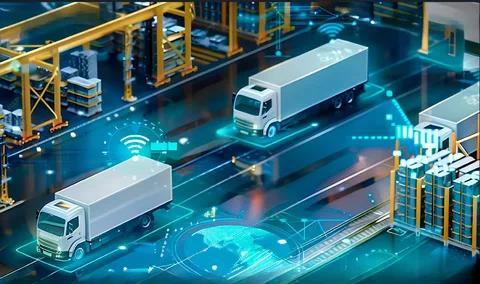
It’s easy to look at all these technologies and imagine a completely automated logistics industry.
But transportation still depends heavily on people.
Drivers understand real-world road conditions.
Warehouse employees know how operations actually work.
Managers make decisions when unexpected problems appear.
Customer service teams handle situations that technology can’t resolve automatically.
Technology can provide information.
People provide judgment.
That’s why the strongest logistics operations aren’t necessarily those with the most automation.
They’re the ones that use technology to help their people work better.
The Future of Transport and Logistics
The logistics industry is moving toward a more connected future.
We will likely see greater use of:
AI-powered logistics
IoT fleet tracking
Cloud-based transportation systems
Predictive maintenance
Smart warehouses
Real-time analytics
Digital supply chain management
Automated logistics processes
But technology adoption shouldn’t happen simply because something is trendy.
Businesses need to ask a more practical question:
Will this technology solve a real problem?
If it reduces delays, improves visibility, lowers unnecessary costs, strengthens safety, or improves customer experience, it may be worth considering.
Final Thoughts
The logistics industry has always been about movement.
But today, it’s increasingly about information as well.
Knowing where a vehicle is.
Knowing where inventory is.
Knowing when demand will change.
Knowing when equipment needs attention.
Knowing when a shipment is likely to arrive.
The businesses that can turn all of this information into useful decisions will have a significant advantage.
The future of Transport and Logistics Technology isn’t about removing people from the process.
It’s about giving people better tools.
A driver with better route information.
A warehouse team with better inventory visibility.
A manager with real-time operational data.
A customer with accurate delivery updates.
When technology and human experience work together, logistics becomes more responsive, efficient, and reliable.
And that’s what Smart Logistics is really about.
Not simply moving things faster.
Moving them smarter.
How Sizaf Infocomm Can Help
Modern transport and logistics businesses depend on reliable connectivity, secure systems, and technology infrastructure to keep operations moving.
At Sizaf Infocomm, we support businesses with Managed IT Services, Network Solutions, Business Connectivity, Cloud Computing, Cybersecurity, and technology infrastructure solutions designed to support modern digital operations.
Whether you’re managing a growing business, connected workforce, or technology-dependent operation, the right digital infrastructure can help your organization stay connected and ready for what’s next.
Get in Touch with Sizaf Infocomm
Malaysia: +60 146600012
USA: +1 516 880 9996
Website: https://sizaf.com