
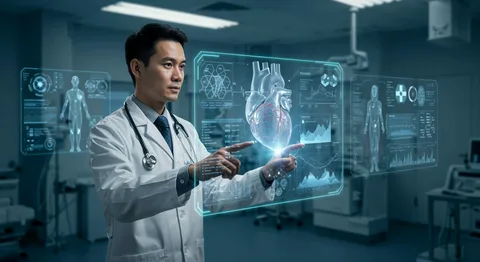
Public healthcare has never been just about hospitals, doctors, medicines, and medical equipment. Behind every successful healthcare service is a much larger system working quietly in the background.
Patient records need to be available when they are needed. Hospitals need reliable networks. Medical devices need to communicate securely. Healthcare workers need access to accurate information. Citizens increasingly expect online services to be fast, convenient, and trustworthy.
At the same time, healthcare has become one of the most attractive targets for cyber threats because medical systems handle highly sensitive information.
This is where Health & Security become closely connected.
Technology is helping public healthcare organizations build systems that are not only smarter and more efficient, but also safer, more resilient, and better prepared for the challenges ahead.
Public Healthcare Is Becoming More Digital
Walk into a modern healthcare facility and you will find technology almost everywhere.
Electronic health records, online appointments, digital prescriptions, laboratory systems, medical imaging, connected devices, cloud platforms, and remote consultations are changing the way healthcare services operate.
For citizens, this can make healthcare easier to access.
Instead of spending hours waiting to make an appointment, patients may be able to use digital platforms. Doctors can access relevant medical information without depending entirely on paper records. Hospitals can coordinate departments more efficiently.
But greater digital connectivity also creates greater responsibility.
When healthcare becomes digital, security cannot be treated as an afterthought.
Every connected system becomes part of the healthcare organization’s technology environment, which means every device, application, network, and user needs appropriate protection.
Why Health and Security Must Work Together

Healthcare data is deeply personal.
Patient records may contain names, addresses, medical histories, prescriptions, test results, insurance information, and other confidential details.
A security incident can therefore cause much more than financial damage.
It can interrupt medical services, delay treatment, expose sensitive information, and reduce public confidence in healthcare institutions.
Imagine a hospital where an important digital system suddenly becomes unavailable.
Doctors may struggle to access patient information. Administrative teams may have difficulty processing appointments. Laboratories may experience delays. Communication between departments can become complicated.
The lesson is simple: healthcare security is also healthcare continuity.
Protecting technology helps protect the services that people depend on.
Cybersecurity Is Becoming a Healthcare Priority
Cybersecurity is no longer something that belongs only to the IT department.
In public healthcare, it affects everyone.
A strong cybersecurity strategy can include network protection, secure authentication, access controls, endpoint security, data encryption, regular backups, vulnerability management, and continuous monitoring.
But technology alone is not enough.
Employees also play an important role.
A single compromised password or convincing phishing email can create an entry point for attackers. Regular security awareness training can therefore be just as important as technical security tools.
The goal is not to make healthcare environments impossible to use.
The goal is to create a system where authorized people can access what they need while unauthorized users are kept out.
Smarter Healthcare Through Connected Technology
Connected technology is creating new possibilities for public healthcare.
Internet of Things (IoT) devices can help monitor equipment, environmental conditions, patient-related information, and facility operations.
For example, connected sensors can help healthcare organizations monitor critical equipment and identify unusual conditions before they become larger problems.
This can support predictive maintenance and reduce unnecessary downtime.
However, every connected device can also introduce security considerations.
Healthcare organizations need to know what devices are connected to their networks, what information they handle, who can access them, and whether they are properly protected.
A smarter healthcare environment must therefore also be a secure healthcare environment.
Cloud Technology Can Improve Public Healthcare
Cloud computing is another important part of digital healthcare transformation.
Instead of relying entirely on physical infrastructure within individual facilities, healthcare organizations can use cloud environments for applications, storage, backup, collaboration, and data processing.
This can provide greater flexibility and scalability.
A healthcare organization may need additional digital resources as services expand. Cloud technology can make it easier to respond to changing requirements without constantly building new physical infrastructure.
But moving information to the cloud does not automatically make it secure.
Healthcare organizations still need strong identity management, access controls, encryption, monitoring, backup strategies, and appropriate security policies.
The real advantage comes from combining cloud flexibility with responsible security practices.
AI Can Help Healthcare Teams Make Better Decisions
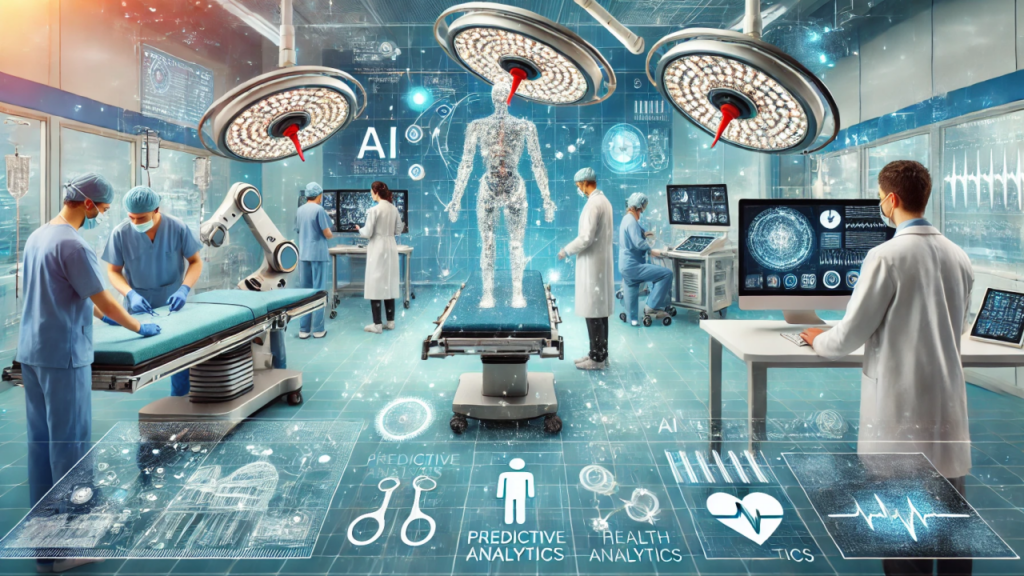
Artificial intelligence is also becoming an important part of the healthcare conversation.
AI can assist with areas such as data analysis, administrative automation, medical research, resource planning, and early identification of patterns.
For public healthcare systems managing large volumes of information, this can be extremely valuable.
But AI also raises important questions.
Where did the data come from?
Who can access it?
How is sensitive information being protected?
How are AI-generated recommendations being reviewed?
How can organizations prevent incorrect or biased outputs from influencing important decisions?
The future of AI in healthcare will therefore depend not only on innovation but also on responsible governance, transparency, security, and human oversight.
Reliable Networks Are the Hidden Foundation
One part of healthcare technology often receives less attention than it deserves: the network.
A digital healthcare system is only as reliable as the infrastructure supporting it.
Hospitals and public healthcare facilities may depend on networks for communication, cloud applications, electronic records, connected medical equipment, security systems, and collaboration between departments.
If connectivity is unreliable, even the best software can become difficult to use.
That is why network infrastructure, bandwidth planning, redundancy, monitoring, and secure connectivity should be treated as essential components of healthcare operations.
In other words, healthcare technology needs a dependable digital foundation.
Digital Healthcare Should Not Leave People Behind
Technology can make healthcare more convenient, but digital transformation must remain inclusive.
Not everyone has the same level of digital literacy. Not every citizen has access to high-speed internet or modern devices.
Public healthcare providers therefore need to consider accessibility when introducing new digital services.
Online platforms should be easy to understand. Important information should remain accessible through appropriate channels. Citizens should have clear guidance when using digital healthcare services.
The objective should not simply be to make healthcare more digital.
It should be to make healthcare more accessible, reliable, secure, and human-centered.
Building Resilient Public Healthcare Systems
Healthcare organizations cannot assume that every system will operate perfectly all the time.
Networks can fail. Hardware can break. Software can experience problems. Cyber incidents can happen. Natural disasters and other unexpected events can disrupt operations.
This makes resilience extremely important.
Regular data backups, disaster recovery planning, redundant systems, security monitoring, incident response procedures, and tested recovery processes can help organizations respond when something goes wrong.
A backup that has never been tested is not a complete recovery strategy.
Healthcare organizations need to know not only that their information is backed up, but also how quickly critical services can be restored.
What the Future of Health & Security Looks Like
The future of public healthcare will likely be increasingly connected.
Digital health platforms, AI, cloud computing, IoT, automation, remote healthcare services, and advanced analytics can create more efficient ways to deliver services.
But there is an important balance to maintain.
The more connected healthcare becomes, the more important security becomes.
Future-ready healthcare organizations will need to think about technology and security together from the beginning rather than adding security after a system has already been deployed.
That means asking practical questions:
- Is patient information properly protected?
- Can critical systems continue operating during disruptions?
- Are networks monitored and secured?
- Are connected devices properly managed?
- Are employees trained to recognize cyber threats?
- Are backups regularly tested?
- Can systems scale as healthcare demands change?
- Are digital services accessible to different groups of citizens?
These questions can help public healthcare organizations move from basic digital transformation toward genuine digital resilience.
Final Thoughts
Technology is changing public healthcare in ways that would have seemed impossible only a few years ago.
Digital records can reduce paperwork. Connected systems can improve coordination. Cloud platforms can provide flexibility. AI can support analysis. Remote services can improve accessibility.
But none of these benefits can reach their full potential without security.
Health and security are no longer separate priorities. They are two sides of the same digital healthcare strategy.
The strongest public healthcare systems of the future will not simply be the ones with the most advanced technology. They will be the ones that know how to use technology responsibly while protecting the people, information, and services behind it.
How Sizaf Infocomm Can Help
Building a secure and reliable digital environment requires the right technology infrastructure, connectivity, network solutions, and IT support.
Sizaf Infocomm helps organizations explore technology solutions designed around their operational requirements, with a focus on reliable infrastructure and connected digital services.
Malaysia: +60 146600012
USA: +1 516 880 9996
Website: https://sizaf.com/