
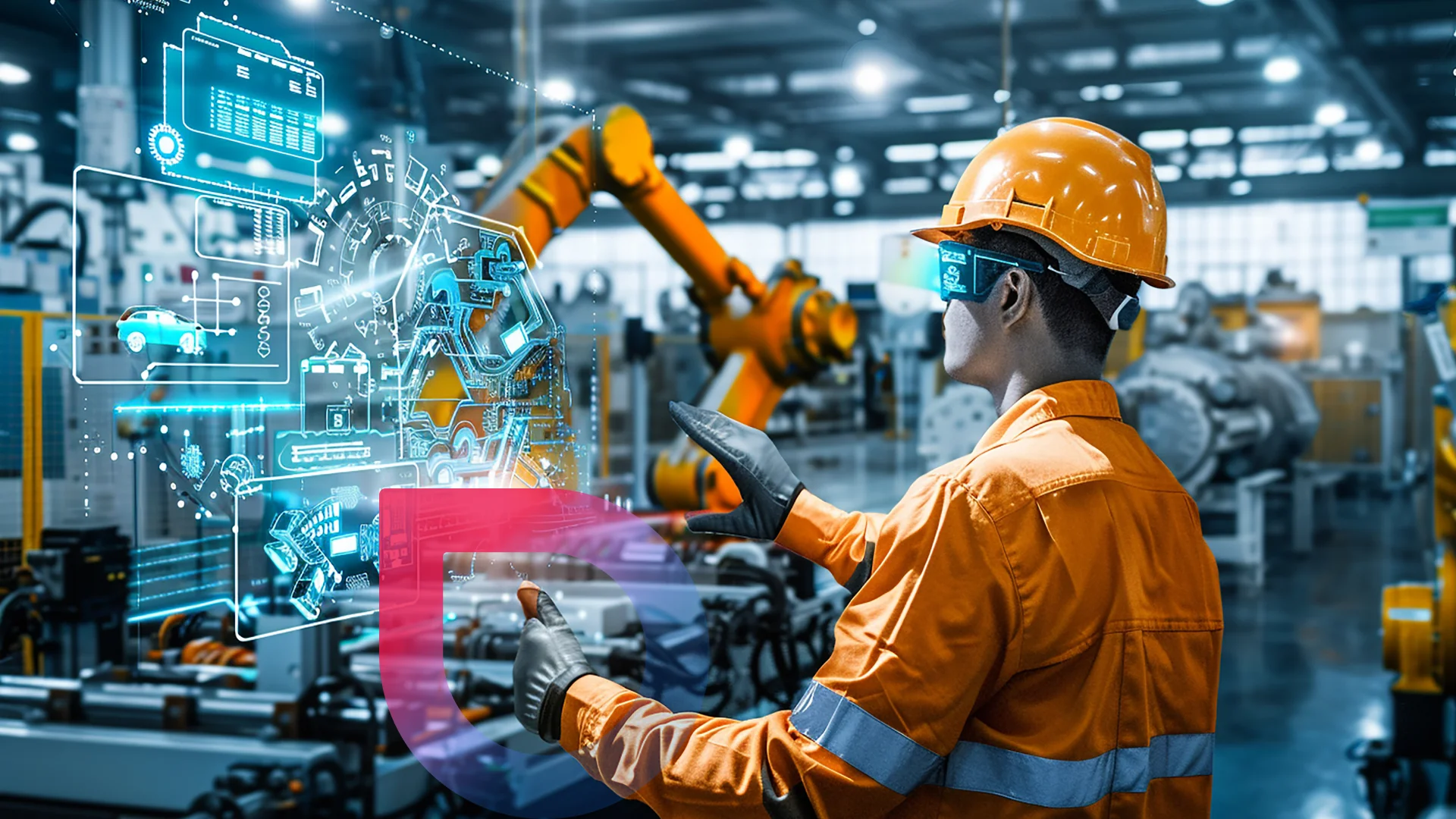
Walk into a modern factory today and you may notice something different.
Machines are communicating with each other.
Sensors are collecting information.
Production teams are monitoring operations through digital dashboards.
Engineers can access data without standing beside a machine.
Quality teams can identify problems earlier.
Pharmaceutical companies can track processes and information more efficiently.
A factory may still look like a factory, but the technology running behind the scenes has changed dramatically.
This is the growing shift toward smart manufacturing.
For businesses in Production, Engineering & Pharma, technology is no longer simply an additional tool. It is becoming part of the way products are designed, manufactured, monitored, tested, and delivered.
What Is Smart Manufacturing?
Smart manufacturing means using connected technologies and digital systems to improve manufacturing and industrial operations.
It can bring together:
- Industrial Internet of Things (IIoT)
- Artificial Intelligence (AI)
- Automation
- Cloud Computing
- Data Analytics
- Robotics
- Digital Monitoring
- Cybersecurity
- Connected Networks
The purpose isn’t to replace every existing system.
Instead, businesses can use technology to make operations more visible, efficient, predictable, and responsive.
For manufacturers, this can mean understanding what’s happening on the production floor without relying entirely on manual checks.
Why Production Businesses Are Becoming More Digital
Manufacturing has always depended on precision.
A small production error can lead to wasted materials, delayed deliveries, additional costs, or quality problems.
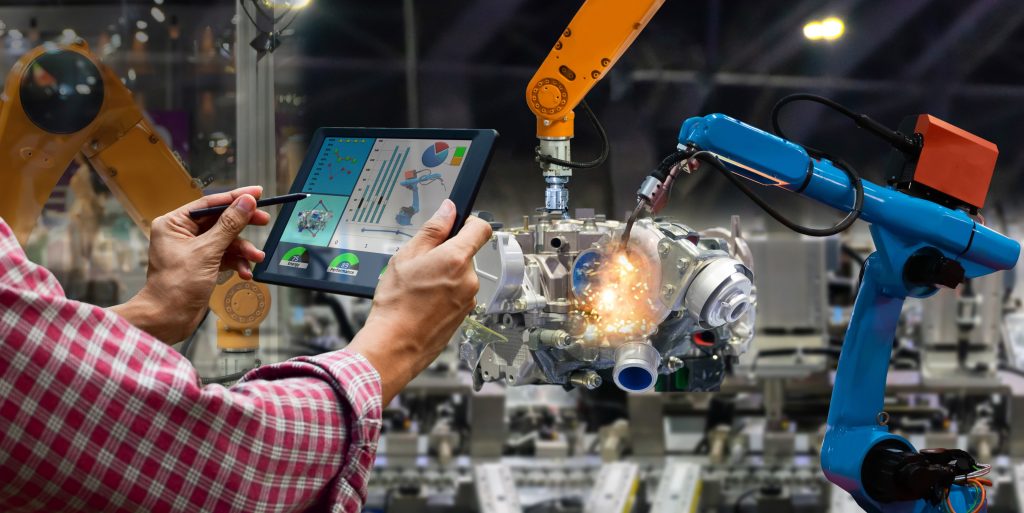
Digital technology can help businesses monitor operations more closely.
Sensors can collect machine information.
Software can analyse production data.
Connected systems can share information between departments.
Managers can receive updates without waiting for manual reports.
This creates a more connected production environment.
The biggest advantage isn’t necessarily having more data.
It’s being able to turn useful data into better decisions.
IIoT Is Connecting the Factory Floor
The Industrial Internet of Things (IIoT) is playing an important role in modern manufacturing.
Machines can be equipped with sensors that collect information such as temperature, vibration, operating conditions, or production activity.
That information can then be analysed to identify changes or unusual patterns.
For example, if a machine starts showing unusual vibration, the business may be able to investigate the issue before the machine experiences a major failure.
This approach is commonly associated with predictive maintenance.
Instead of waiting for equipment to break, companies can use available data to plan maintenance more intelligently.
Predictive Maintenance Can Reduce Unplanned Downtime
Every manufacturer understands the frustration of unexpected downtime.
A machine stops.
Production slows down.
Employees wait.
Orders may be delayed.
Maintenance teams have to react quickly.
Predictive maintenance aims to reduce some of this uncertainty by monitoring equipment conditions and identifying potential warning signs.
It doesn’t mean machines will never fail.
Instead, it can give maintenance teams better information about when attention may be required.
For businesses where equipment downtime is expensive, that information can be extremely useful.
AI Is Bringing New Possibilities to Manufacturing
Artificial intelligence is becoming increasingly relevant to industrial operations.
AI can be used to analyse large volumes of production data and identify patterns that may be difficult to detect manually.
Potential applications include:
- Quality inspection
- Demand forecasting
- Production optimisation
- Predictive maintenance
- Process monitoring
- Supply chain analysis
- Anomaly detection
For example, computer vision systems can analyse images to identify certain product defects.
This doesn’t mean human workers become unnecessary.
In many environments, technology works alongside people, helping teams make faster and more informed decisions.
Industry 5.0 Brings People and Technology Together
Much of the conversation around manufacturing has focused on automation.
But the next step isn’t necessarily about removing people from the process.
Industry 5.0 places greater emphasis on collaboration between humans and advanced technologies.
Engineers, technicians, operators, and machines can work together.
Machines can handle repetitive or highly precise tasks.
People can focus on problem-solving, creativity, judgement, and specialised knowledge.
The result can be a more flexible manufacturing environment where technology supports human expertise.
Cloud Computing Is Changing Industrial Data Management
Factories and engineering companies generate large amounts of information.
Production records.
Equipment data.
Quality information.
Design files.
Maintenance records.
Supply chain information.
Storing and managing all this information effectively can become difficult.
Cloud computing provides businesses with flexible options for storing, accessing, processing, and analysing data.
It can also make collaboration easier for teams working across different locations.
However, industrial cloud environments still need appropriate security, access controls, and data management.
Moving information to the cloud should be part of a planned technology strategy.
Engineering Is Becoming More Connected
Engineering teams increasingly depend on digital tools.
Computer-aided design.
Simulation.
Project management.
Digital documentation.
Cloud collaboration.
Data analysis.
Connected engineering systems can help teams work together more efficiently.
An engineer in one location may be able to collaborate with another team member somewhere else without constantly exchanging physical documents.
This can be particularly useful for businesses managing complex projects with multiple teams and locations.
Pharmaceutical Manufacturing Has Unique Technology Requirements
The pharmaceutical industry operates in an environment where consistency, traceability, quality, and data management are extremely important.
Digital systems can support areas such as:
- Production monitoring
- Inventory management
- Quality processes
- Documentation
- Equipment monitoring
- Data management
- Supply chain visibility
Technology doesn’t replace regulatory or quality requirements.
Instead, properly designed systems can help organisations manage information and processes in a more structured way.
For pharmaceutical businesses, digital transformation needs to be approached carefully, with appropriate controls and validation depending on the application.
Cybersecurity Is Becoming Critical for Industrial Businesses
As factories become more connected, cybersecurity becomes more complicated.
A traditional IT network may now interact with operational technology, connected machinery, sensors, remote monitoring systems, and other devices.
This creates new security considerations.
Businesses should understand:
- Which devices are connected
- Who can access systems
- How systems communicate
- Where important data is stored
- How software is updated
- How incidents would be handled
Network segmentation, access controls, monitoring, authentication, and security policies can all play a role.
Industrial cybersecurity needs to protect both information and operations.
Reliable Networks Keep Smart Factories Connected
A smart factory depends on communication.
Machines need to exchange information.
Sensors need to send data.
Employees need access to systems.
Cloud platforms need connectivity.
Monitoring tools need reliable communication.
This is why Network Services are an important part of modern industrial infrastructure.
A network designed for a conventional office may not be suitable for a highly connected production environment.
Manufacturers need to consider reliability, capacity, security, device management, and future growth.
Digital Twins Are Changing How Engineers Understand Systems
Another interesting development is the use of digital twins.
A digital twin is a digital representation of a physical object, system, or process.
In suitable applications, businesses can use data from real-world systems to understand how equipment or processes are performing.
Engineers can potentially use these models to explore scenarios, monitor conditions, or identify areas for improvement.
Digital twins can be particularly useful in complex engineering and manufacturing environments where testing every scenario physically may be expensive or time-consuming.
Automation Can Improve Repetitive Processes
Manufacturing has always used automation.
What’s changing is the level of intelligence and connectivity around it.
Automated systems can handle repetitive tasks consistently.
Robotics can support production activities.
Software can automate administrative processes.
Digital workflows can reduce manual data entry.
The goal isn’t simply to automate everything.
Businesses should identify processes where automation provides genuine value.
If a manual process is already efficient and inexpensive, automation may not be necessary.
Technology investment should solve a business problem.
Technology Can Improve Quality Control
Quality is critical across production and pharmaceutical operations.
Traditional quality checks may involve manual inspections.
Modern systems can add digital tools to the process.
Sensors can monitor production conditions.
Computer vision can inspect products.
Software can record quality information.
Analytics can identify recurring patterns.
These technologies can help teams detect potential issues earlier and create better visibility into production processes.
Human expertise remains important, particularly when decisions require judgement and context.
Supply Chain Visibility Is Becoming More Important
Manufacturers don’t operate in isolation.
They depend on suppliers, transportation networks, warehouses, customers, and other partners.
A disruption in one part of the chain can affect the entire operation.
Digital technology can help businesses improve visibility into inventory, orders, production, and logistics.
When information is connected, companies can respond to changes more quickly.
This becomes increasingly important for businesses operating across multiple locations or international supply chains.
Sustainability Is Also Driving Technology Adoption
Technology can support sustainability efforts in manufacturing.
Businesses can use sensors and analytics to monitor energy consumption.
Digital systems can help identify waste.
Automation can improve resource utilisation.
Data can provide better visibility into operational efficiency.
The objective isn’t simply to install smart devices.
It is to use information to understand where resources are being consumed and where improvements may be possible.
What Businesses Should Consider Before Modernising
Digital transformation doesn’t need to happen overnight.
A better approach is to start with business needs.
Ask:
Which production problems are costing us the most?
Where are we losing time?
Which processes rely heavily on manual work?
Where do we lack visibility?
Are our networks secure enough?
Can our current infrastructure support connected technologies?
How will new systems interact with existing equipment?
These questions can help businesses build a practical technology roadmap.
The Future of Production, Engineering & Pharma
The industrial environment will continue becoming more connected.
AI will become more capable.
Industrial IoT will expand.
Automation will become more intelligent.
Cloud platforms will support more industrial applications.
Engineering teams will collaborate through increasingly digital environments.
Pharmaceutical manufacturers will continue investing in technology for operational visibility, quality, and data management.
But technology adoption should remain practical.
The most successful transformation isn’t necessarily the one with the most advanced technology.
It’s the one that solves real problems.
Final Thoughts
The future of manufacturing isn’t simply about machines becoming smarter.
It’s about people, machines, data, software, and infrastructure working together.
For Production, Engineering & Pharma businesses, this creates an opportunity to improve visibility, reduce avoidable downtime, strengthen operations, and prepare for future changes.
But digital transformation requires more than buying new equipment.
It requires reliable networks.
Secure infrastructure.
Well-managed data.
Skilled people.
Thoughtful planning.
And technology that actually supports business objectives.
The factories and industrial businesses of tomorrow will be more connected than ever.
The question isn’t whether technology will become part of manufacturing.
It already has.
The real question is whether your infrastructure is ready for what’s next.
How Sizaf Infocomm Can Help
Sizaf Infocomm provides technology solutions designed to support businesses as they build reliable and scalable digital infrastructure.
From Tech Infrastructure Services and Network Services to Managed IT Services, Cloud Computing, Web & Media Services, and Business Connectivity, the right technology foundation can help Production, Engineering & Pharma organisations strengthen their digital operations.
Malaysia: +60 146600012
USA: +1 516 880 9996
Website: https://sizaf.com/