
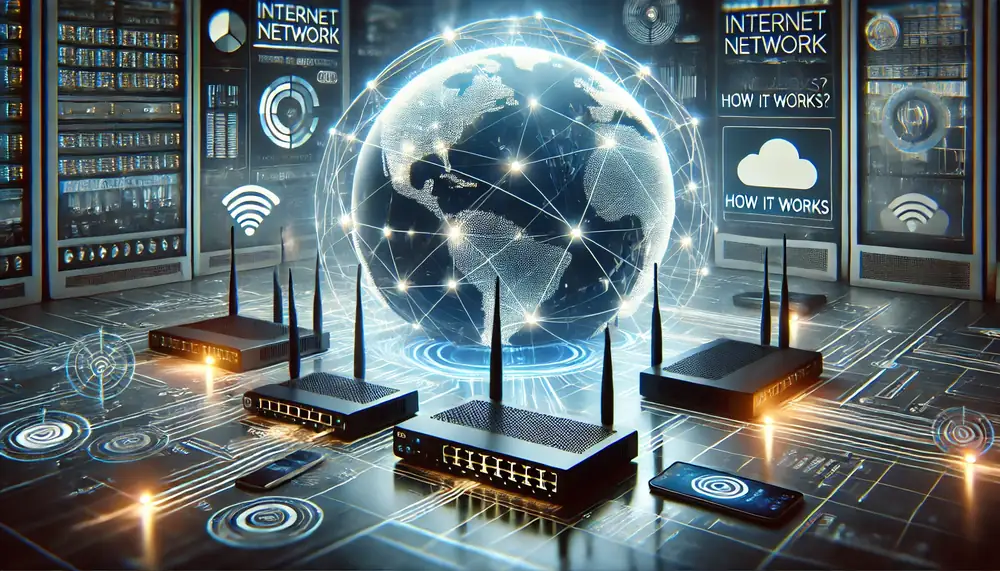
Imagine Waking Up Tomorrow and the Internet Is Gone
Not slow.
Not buffering.
Not “try restarting your router.”
Gone.
Completely unavailable.
No social media.
No online banking.
No video calls.
No food delivery apps.
No cloud services.
No emails.
Nothing.
At first, it might sound like a nice break from screens.
Some people might even welcome the idea.
But after a few hours, reality would begin to set in.
Because the truth is, the internet has become so deeply woven into our daily lives that most of us don’t realize how much we depend on it until it’s unavailable.
In 2026, the internet isn’t just a tool.
It’s the invisible infrastructure that powers modern society.
So what would actually happen if the internet stopped working for 24 hours?
Let’s find out.
The First Hour: Confusion Everywhere
The moment a global Internet Outage begins, millions of people would think the problem was local.
People would restart their routers.
Turn their phones off and on.
Call their internet providers.
Check cables.
Refresh web pages repeatedly.
Most of us have experienced internet issues before, so our first instinct would be to assume it’s temporary.
But as the minutes pass, something unusual would become clear.
Nobody has internet.
Not your neighbors.
Not your friends.
Not your workplace.
Not even major organizations.
That’s when confusion would start turning into concern.
Communication Would Change Instantly
Think about how many conversations happen online every day.
Messaging apps.
Video calls.
Emails.
Social media platforms.
Business collaboration tools.
Without Digital Connectivity, these communication channels would disappear almost immediately.
Remote workers would struggle to connect with teams.
Families living in different cities or countries would lose their easiest way to stay in touch.
Students attending online classes would suddenly be disconnected.
For a generation that has grown up with instant communication, even a few hours without internet would feel surprisingly disruptive.
Businesses Would Feel the Impact of Within Minutes
Many businesses today operate almost entirely online.
A global Internet Outage would create immediate challenges.
Online stores couldn’t process orders.
Customer service platforms would stop functioning.
Cloud-based software would become inaccessible.
Digital payment systems would fail.
For many organizations, even a short disruption can result in significant financial losses.
Now imagine that disruption lasting an entire day.
Large corporations might have contingency plans.
Smaller businesses could struggle much more.
This is why reliable Internet Services have become essential rather than optional.
Online Shopping Would Come to a Complete Stop

Imagine trying to buy something online.
You open your favorite shopping app.
Nothing loads.
You try another website.
Still nothing.
Millions of transactions happen every day through e-commerce platforms.
Without internet access:
- Orders can’t be placed.
- Payments can’t be processed.
- Shipment tracking disappears.
- Customer support becomes difficult.
The entire ecosystem of Online Business would effectively pause.
For consumers, it would be inconvenient.
For retailers, it could mean substantial revenue losses.
Banking and Payments Would Become a Challenge
Many people rarely carry cash anymore.
We tap cards.
Scan QR codes.
Transfer money through mobile apps.
Pay bills online.
An internet shutdown would immediately affect many of these services.
Customers might be unable to:
- Access online banking.
- Transfer funds.
- Make digital payments.
- Check account balances.
While some banking systems have backup mechanisms, modern finance depends heavily on reliable Digital Connectivity.
The interruption would remind us just how much our financial lives have moved online.
Healthcare Systems Could Face Serious Disruptions

Healthcare is another sector that relies heavily on internet-based systems.
Hospitals use connected technologies for:
- Patient records,
- Appointment scheduling,
- Medical imaging,
- Communication between departments.
Without internet access, healthcare professionals would need to rely on alternative processes.
Many hospitals have emergency procedures for such situations, but operations would still become more challenging.
It’s a powerful reminder that internet infrastructure supports far more than entertainment and social media.
In many cases, it supports essential services.
Students Would Get an Unexpected Day Off
Or would they?
Online learning has become a major part of education.
Schools, universities, and training institutions increasingly depend on digital platforms.
Without internet access:
- Virtual classes would stop.
- Learning platforms would become unavailable.
- Educational resources couldn’t be accessed.
For students, it might initially seem like a welcome break.
But extended disruptions would quickly impact learning continuity.
Education today depends heavily on technology and Internet Services.
The Unexpected Effects on Everyday Life

Perhaps the biggest surprise would be how many ordinary activities suddenly become difficult.
Consider how often you use the internet without thinking about it.
Checking the weather.
Ordering food.
Booking transportation.
Using navigation apps.
Streaming music.
Watching videos.
Even many smart home devices depend on internet connections.
A 24-hour outage would expose just how connected our daily routines have become.
Some People Might Actually Enjoy It
Interestingly, not every effect would be negative.
Without notifications, endless scrolling, and constant digital distractions, some people might rediscover activities they rarely make time for.
Families might spend more time talking.
Friends might meet in person.
Books might finally come off the shelf.
People could reconnect with hobbies they’ve neglected for years.
For some, a temporary digital pause might be refreshing.
At least for a little while.
What This Scenario Teaches Us
The purpose of imagining a global internet outage isn’t to create fear.
It’s to create awareness.
The internet has become one of humanity’s most important innovations.
It powers communication.
Business.
Education.
Healthcare.
Entertainment.
And countless other aspects of modern life.
Yet because it’s always available, we rarely stop to appreciate its importance.
Until we imagine life without it.
The Future Depends on Reliable Connectivity
As technologies such as:
- Cloud Computing
- Artificial Intelligence
- Smart Cities
- Remote Work Solutions
- Internet of Things (IoT)
continue to expand, our dependence on digital infrastructure will only grow.
This makes reliable Internet Services more important than ever.
Businesses, governments, and service providers are continually investing in stronger, more resilient networks to ensure the world stays connected.
Because in today’s digital age, connectivity isn’t just convenient.
It’s essential.
Final Thoughts
Could we survive 24 hours without the internet?
Absolutely.
People lived without it for centuries.
But would modern life function normally?
Not even close.
A single day without internet would affect communication, education, healthcare, commerce, banking, and countless daily activities.
It would remind us of something we often overlook:
The internet isn’t just a technology.
It’s the foundation of our connected world.
And while we may occasionally complain about slow Wi-Fi or temporary outages, imagining a full day without internet shows just how valuable Digital Connectivity truly is.
How Sizaf Infocomm Can Help
In a world where reliable connectivity is critical, businesses need technology partners they can trust.
At Sizaf Infocomm, we help organizations stay connected through managed IT services, network solutions, cloud technologies, cybersecurity, and digital transformation strategies designed for the future.
Reach Out to Sizaf Infocomm
📞 Malaysia: +60 146600012
📞 USA: +1 516 880 9996
🌐 Website: https://sizaf.com